
Local Service Ads vs Google Ads: Why Remodelers Struggle to Turn Clicks Into Signed Jobs
The Real Problem Isn’t Getting Clicks – It’s Knowing Which Clicks Become Remodeling Jobs
A lot of remodelers are not short on “marketing activity.”
They have tried Google Ads. They may have tested Local Services Ads. They have paid for leads from Angi, HomeAdvisor, or Thumbtack. They still get referrals. Maybe they have even done a few home shows.d
But when the month ends, the real question is harder to answer:
Which of those leads actually turned into signed remodeling jobs?
That is where the frustration starts.
A kitchen remodeler may see clicks coming in from Google Ads, phone calls from local service ads, and a few forms from the website. But unless those calls are tracked through estimates, proposals, and signed contracts, it all starts to feel like guessing.
Remodeling is not like a quick plumbing repair or an emergency HVAC call. Homeowners take their time. They compare contractors. They look at Google reviews, project photos, before-and-after examples, and whether your company feels trustworthy enough to invite into their home for a major project.
So when contractors compare local service ads vs google ads, the question should not be, “Which one gets more clicks?”
The better question is:
Which one helps bring in serious homeowners who are likely to become real jobs?
Local Service Ads vs Google Ads: What Remodelers Need to Understand First
Local Service Ads are built around direct leads
Google Local Services Ads are built for local service businesses that want direct customer contacts, like phone calls or message leads.
Instead of paying for clicks, businesses follow a pay per lead model, paying when a potential customer contacts them through the ad.
For remodelers, this can be appealing since you’re not paying for every browser or low-intent search. You’re paying when someone actually reaches out.
Local Services Ads also appear at the top of google search results and include trust signals like the google guaranteed badge or google screened badges, which can improve credibility before a homeowner visits your site.
However, LSAs don’t guarantee high quality leads. Some prospects may still be price-shopping, outside your service area, or early in the buying process.
For best results, LSAs should be supported by strong google reviews, a complete google business profile, accurate business hours, fast responses, and a clear lead qualification process.
Google Ads are built around clicks and landing pages
Google Ads works differently.
With standard Google Ads, especially search ads, advertisers bid on relevant keywords. When users search for something like “bathroom remodeler near me” or “kitchen remodeling contractor in [city],” your ad can appear in the search results page.
You usually pay through a pay per click model. That means you pay when someone clicks the ad, whether or not they call, fill out a form, or become a qualified lead.
The upside is control.
Google Ads offers more control over keyword targeting, ad copy, ad placement, location settings, ad formats, landing page experience, and the specific remodeling services you want to promote. You can build campaigns around kitchen remodels, bathroom remodels, basement finishing, home additions, or specific suburbs in your local area.
The risk is waste.
A campaign that targets broad keywords can burn ad spend quickly. “Bathroom remodeler near me” may be valuable. “Cheap bathroom ideas” may not be. “Kitchen renovation contractor [city]” may be worth testing. “DIY kitchen remodel” probably is not.
This is where many remodelers get burned. They are told Google Ads works, but the campaign is not built around real remodeling intent. The clicks come in, the performance data looks busy, but the contractor cannot clearly see which leads generated estimates or signed contracts.
The honest comparison
The honest answer in the google local service ads vs google ads conversation is this:
Local Services Ads can be simpler and faster to test. They are built around direct leads and can help service based businesses show up for relevant local searches.
Google Ads can offer more control. It can support a more specific advertising strategy, especially when you want to promote certain job types, locations, or landing pages.
But neither ad platform fixes the bigger issue by itself.
If a remodeler does not track phone calls, lead quality, estimate status, and booked jobs, both Google LSAs and Google Ads can turn into a pile of disconnected numbers.
Clicks are not the finish line.
Leads are not the finish line.
Signed remodeling jobs are the point.
Why Clicks Often Fail to Turn Into Signed Remodeling Jobs
Remodeling leads are higher-consideration than basic service calls
A homeowner with a burst pipe may call the first plumber who answers.
A homeowner planning a $45,000 kitchen remodel behaves differently.
They may search today, call next week, meet with two or three contractors, talk with a spouse, compare financing options, look through galleries, read Google reviews, and then wait another month before signing.
That does not mean the lead is bad. It means the buying process is longer.
This is why remodelers need to be careful when judging local service ads vs google ads too quickly. A click today may become a signed job later. A phone call from LSA may sound promising but never turn into an estimate. A form submission from organic search results may look quiet at first but become one of the best jobs of the quarter.
A “lead” is not automatically a sales opportunity.
A serious remodeling lead usually needs several things before they trust you enough to move forward:
- Proof that you do the type of project they want
- Reviews from local customers
- Clear examples of past work
- A helpful first conversation
- A defined next step
- Confidence that your company can handle the job professionally
Without those pieces, even a good ad can underperform.
Agencies often report activity instead of revenue
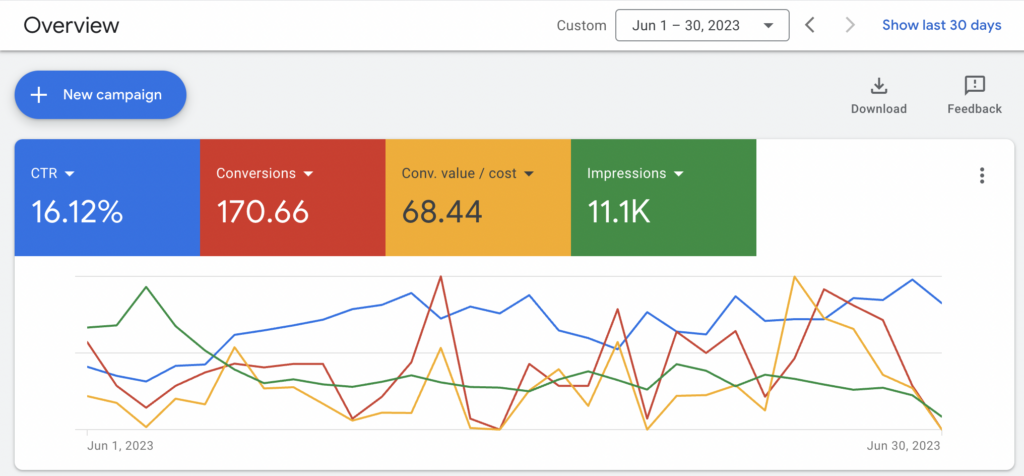
Many remodelers have seen reports full of clicks, impressions, cost per click, traffic, and conversion numbers.
Those numbers are not useless. They can help diagnose performance.
But they are not the same as business results.
A Google Ads report may show that the campaign generated 300 clicks. A Local Services Ads dashboard may show 20 customer contacts. A website report may show more online visibility.
But the contractor still needs answers to the questions that actually matter:
How many were qualified leads?
How many booked estimates?
How many received proposals?
How many signed?
How much revenue came from each source?
That is where many marketing reports fall short. They stop at the platform level. The remodeler needs reporting that connects marketing to real jobs.
Hector’s view is simple: marketing ROI should not be buried under complicated charts. If the goal is booked work, the reporting should follow the lead all the way to the job.
Weak tracking hides the real story
A lot of contractors do not have bad marketing.
They have unclear tracking.
The phone rings, but no one knows whether the call came from Google Maps, Google Ads, Local Services Ads, organic search results, a referral, or a shared lead platform.
A form comes through, but the lead source is missing.
An estimate gets booked, but no one tags where it came from.
A job gets signed, but the contractor cannot trace it back to the original advertising platform.
That is how google lsa vs google ads turns into guesswork.
One remodeler may think Google Ads is wasting money because the cost per click looks high. But if two of those clicks turned into large bathroom remodels, the campaign may be profitable.
Another remodeler may think LSAs are working because the pay per lead cost looks reasonable. But if most of those calls are outside the service area or too small for the business goals, the real cost per signed job may be poor.
Without call tracking, CRM source tagging, and booked-job reporting, contractors either overspend on channels that are not producing or shut off channels that were quietly working.
Why Common Lead Sources Still Leave Remodelers Without Control
Shared lead platforms create price-shopping conversations
Platforms like Angi, HomeAdvisor, Thumbtack, and similar services can produce leads.
That is the honest part.
The problem is how those leads are often created.
A homeowner fills out one request and several local businesses may receive the same opportunity. Now the remodeler is not just having a conversation about fit, quality, communication, timeline, and craftsmanship. They are often being compared side by side on price.
That is a rough place for a family-owned remodeling company to compete.
For bigger-ticket work, the best clients usually are not just looking for the cheapest option. They want confidence. They want to know the project will be handled correctly. They want someone who communicates well and respects their home.
Shared leads can make that harder because the conversation starts in a crowded environment.
The contractor does not own the relationship. The platform does.
Referrals are valuable, but they do not create predictability
Referrals are still one of the best signs of a strong remodeling company.
If past customers are willing to recommend you, that means your work, communication, and reputation matter in the local area.
But referrals are not a complete lead generation system.
They come in waves.
One month, three past clients send new homeowners your way. The next month, the phone goes quiet. That unpredictability makes it hard to plan hiring, schedule crews, manage cash flow, or decide when to invest in growth.
A remodeler can be well-known locally and still feel exposed when referrals slow down.
Referrals should be part of the system. They should not be the whole system.
Trade shows create spikes, not systems
Home shows and trade shows can be useful.
They get you in front of local customers. They let homeowners meet you in person. They can create conversations around kitchens, bathrooms, additions, and whole-home remodeling projects.
But they are usually seasonal.
They create bursts of interest, not steady month-over-month demand.
A remodeler may leave a home expo with a stack of names, but that does not mean those contacts will turn into qualified leads, estimates, or signed jobs. Some are early in the buying process. Some are gathering ideas. Some are not ready to move.
Trade shows can support visibility, but they rarely create predictable lead flow by themselves.
PPC without tracking becomes expensive guessing
Google Ads can work for remodelers.
But PPC ads without tracking can get expensive fast.
If campaigns are too broad, landing pages are weak, phone calls are not recorded, and the CRM does not show what became a signed job, the contractor is left judging advertising success by surface-level numbers.
That is not enough.
The same applies when comparing Google Ads and Local Services Ads. One may produce more phone calls. The other may produce fewer leads but better job value. One may help with expansion into a new suburb. The other may be better for immediate local search ads visibility.
You cannot know that from clicks alone.
Spikes are not systems. Visibility without ownership is not control.
Where Serious Remodeling Leads Actually Come From Now
Google Search and Google Maps are the modern billboards
When homeowners are ready to compare remodelers, they usually do not start with a billboard, magazine ad, or postcard.
They search.
They open Google. They look at Google Maps. They compare local businesses in the search results.
For remodelers, high-intent searches often look like:
- “kitchen remodeler near me”
- “bathroom remodeling contractor in [city]”
- “basement finishing contractor near me”
- “home addition contractor [city]”
- “design build remodeling company near me”
These searches matter because they show intent.
The homeowner is not just browsing. They are looking for local service providers who can solve a specific problem or handle a specific project.
That is why Google Search and Google Maps have become the modern billboards for remodelers. Not because they are flashy, but because they show up at the moment a potential customer is actively looking.
Maps visibility matters because trust is visible immediately
Google Maps is not just a location tool.
For remodelers, it is often the first trust filter.
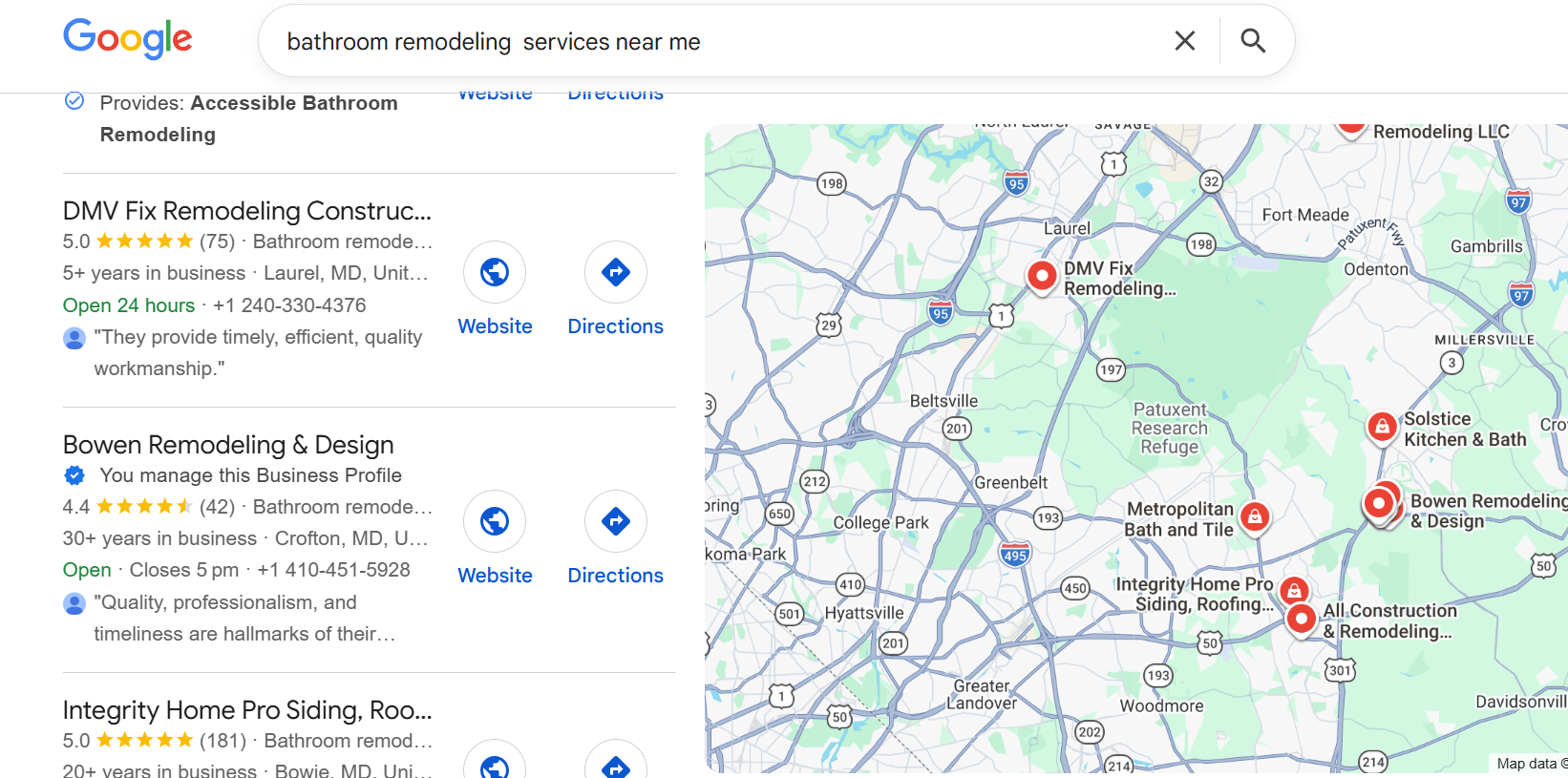
A homeowner can see your reviews, rating, photos, business hours, service area, and basic business information before clicking anything. They can compare your company against other local businesses in seconds.
That means your Google Business Profile matters.
If one remodeler has a complete profile, strong Google reviews, real project photos, and recent activity, while another has a thin profile with few reviews and no proof, the homeowner starts forming an opinion before the first call.
This is especially important in remodeling because the stakes are personal.
A kitchen remodel disrupts daily life. A bathroom remodel affects routines. A basement finish or home addition involves budget, timeline, design choices, and trust.
Homeowners are not just asking, “Who can do this?”
They are asking, “Who do I trust inside my home?”
Search results show whether you look like the obvious local choice
Showing up is only part of the job.
Looking credible is the next part.
A remodeler may appear in search results, but if the website is thin, the reviews are weak, the project photos are outdated, or the service pages do not clearly match what the homeowner needs, the lead may go somewhere else.
That is why organic search results, Google Maps, Google Business Profile optimization, reviews, and paid visibility all work together.
A homeowner may first see your local service ad. Then they may check your reviews. Then they may click your website. Then they may look for project photos. Then they may call.
Or they may find you through organic search, compare you in Maps, and later click a Google Ad while still deciding.
The path is not always clean.
That is why the system behind the visibility matters more than any one ad type.
How Visibility Turns Into Real Phone Calls and Signed Remodeling Jobs
The path is visibility → trust → call → estimate → signed contract
Good lead generation is not just about being seen.
It is about what happens after the homeowner sees you.
For a remodeler, the path usually looks like this:
A homeowner searches for a service. They find your company in Google search results, Google Maps, Local Services Ads, or Google Ads. They check your reviews, photos, service pages, and proof. If they feel confident, they call or submit a form.
Then the real sales process begins.
Is the project a fit?
Is it in your service area?
Is the budget realistic?
Is the timeline workable?
Does the homeowner understand your process?
Can you book the estimate?
That is how visibility becomes a real opportunity. Not every click will turn into a job. Not every call should. The goal is to create a steady flow of qualified leads that can become estimates, proposals, and signed remodeling contracts.
Reviews and project proof do the heavy lifting before the call
By the time a serious homeowner calls, they have usually already judged you.
They have looked at your reviews. They have checked your photos. They have scanned your website. They may have compared you against two or three other remodelers.
That is why reviews and proof matter so much.
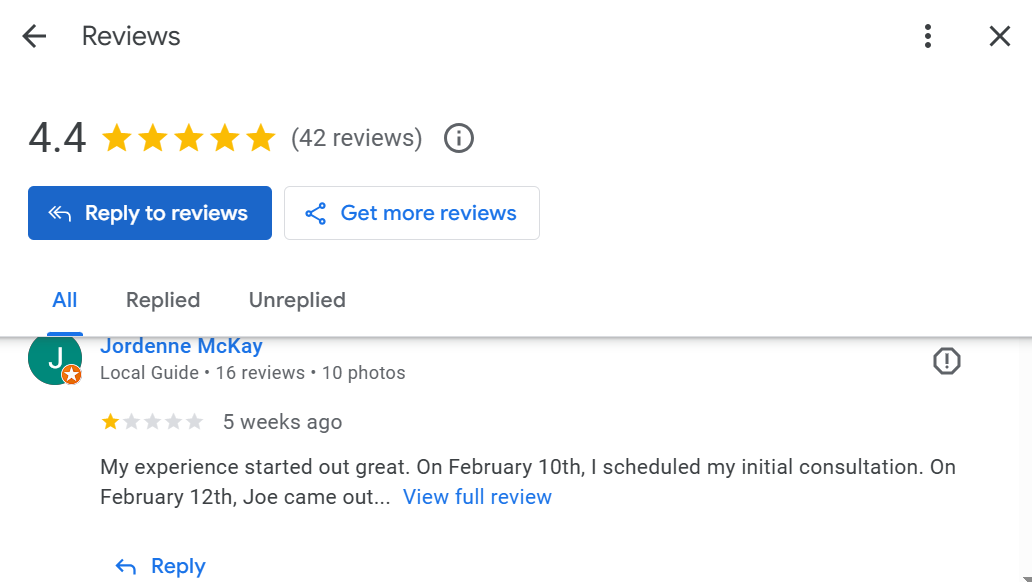
A review that says, “They showed up on time and communicated clearly during our kitchen remodel” is more useful than a generic five-star rating.
A real before-and-after bathroom remodel photo builds more trust than a stock image.
A clear service page about basement finishing in your city helps more than a vague “we do remodeling” page.
Homeowners want confidence before they contact you. Strong proof makes the first call warmer, more serious, and more likely to turn into an estimate.
Tracking must follow the lead beyond the first call
The real question is not, “How many leads did we get?”
The better question is:
Which source produced qualified estimates and signed jobs?
That is where many remodelers lose the thread.
A contractor may know how many phone calls came in from Google Ads or local service ads. But if those calls are not connected to the CRM, proposal status, and final job outcome, the business still does not know what is really working.
A clean system should show:
- Where the lead came from
- Whether the call was qualified
- Whether an estimate was booked
- Whether a proposal was sent
- Whether the job was signed
- What the job was worth
That is the difference between advertising data and business clarity.
Once a remodeler can see that clearly, the conversation changes. It is no longer “local service ads vs google ads” in theory. It becomes, “Which source is helping us win the right jobs, at the right cost, in the right markets?”
The next step is building that clarity into a repeatable system — one that does not depend on one platform, one lucky referral streak, or one expensive campaign to keep the phone ringing.
The Hector 6-Step Predictable Lead System for Remodelers
1. Optimize the Google Business Profile
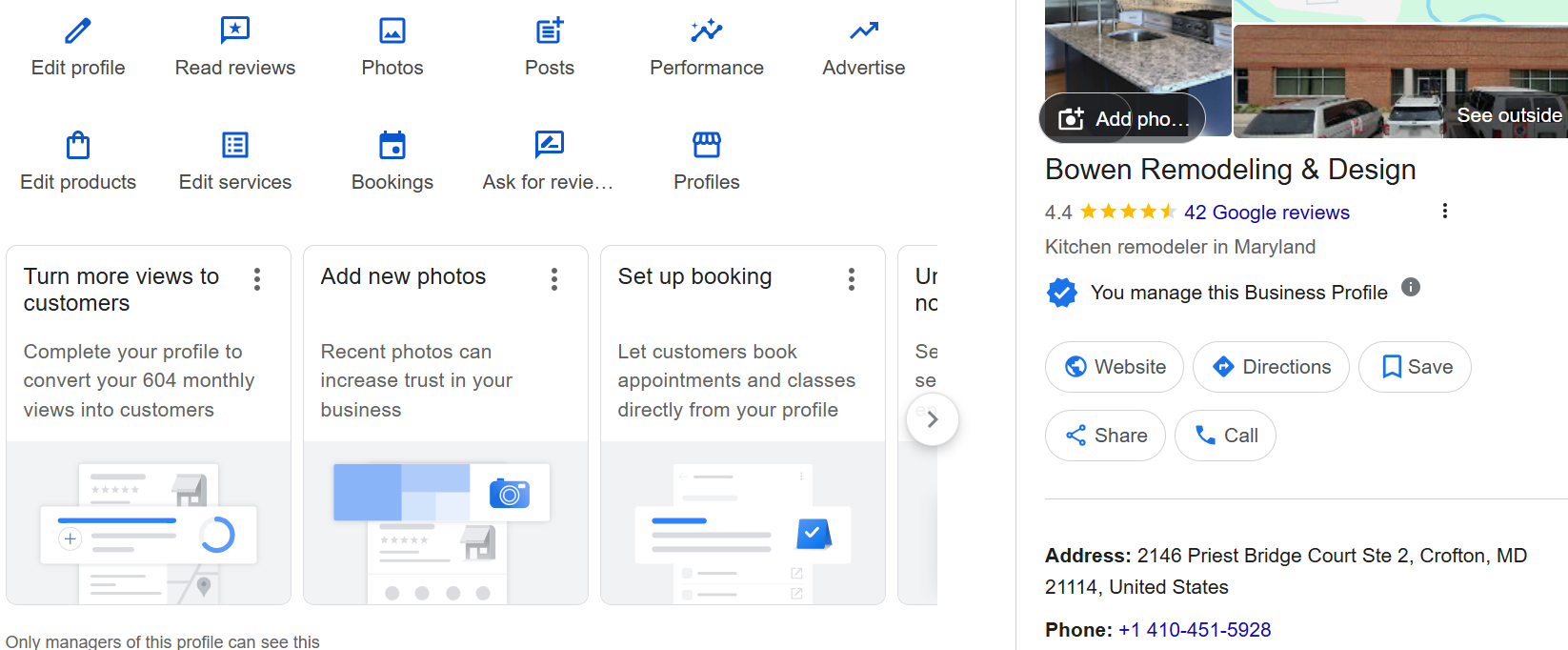
Your Google Business Profile is one of the most important pieces of your online visibility — especially for local service businesses like remodeling.
Before a homeowner clicks anything, they are already comparing you against other local businesses in Google Maps. They are looking at your reviews, your photos, your service area, and whether your business feels credible.
For remodelers, your profile should clearly reflect the work you actually want: kitchen remodels, bathroom remodels, basement finishing, and additions — not just a generic “we do remodeling.”
There are a few things you can improve quickly:
- Add real project photos
- Make sure your services and categories are accurate
- Respond to reviews consistently
Beyond that, the deeper work is making sure your profile aligns with how people actually search in your local area — and how it connects with your website and SEO.
2. Build consistent 5-star reviews
Reviews are not just a reputation tool. For remodelers, they are a decision tool.
A homeowner is not just checking your rating — they are reading how you handled a kitchen remodel, how you communicated during the project, and whether the final result matched expectations.
That means your reviews need to reflect real work.
Instead of chasing volume, focus on consistency and relevance. A steady flow of detailed reviews that mention specific project types and experiences will do more for your business’s credibility than a large number of generic ones.
3. Launch Local Services Ads for early traction
Local Services Ads can help generate leads relatively quickly. Many remodelers see activity within the first few weeks when the account is set up properly.
They work well because they appear at the top of search results and are built around direct customer contacts rather than clicks.
But they are not a set-it-and-forget-it channel.
Lead quality can vary. Some inquiries will be strong, others will not. That is why it is important to monitor what types of calls are coming in, how they fit your service area, and whether they align with your business goals.
This is where the difference in local service ads vs google ads starts to show up in real terms. LSAs can create early traction, but they do not offer the same level of control as Google Ads.
4. Build and optimize the website for Local SEO
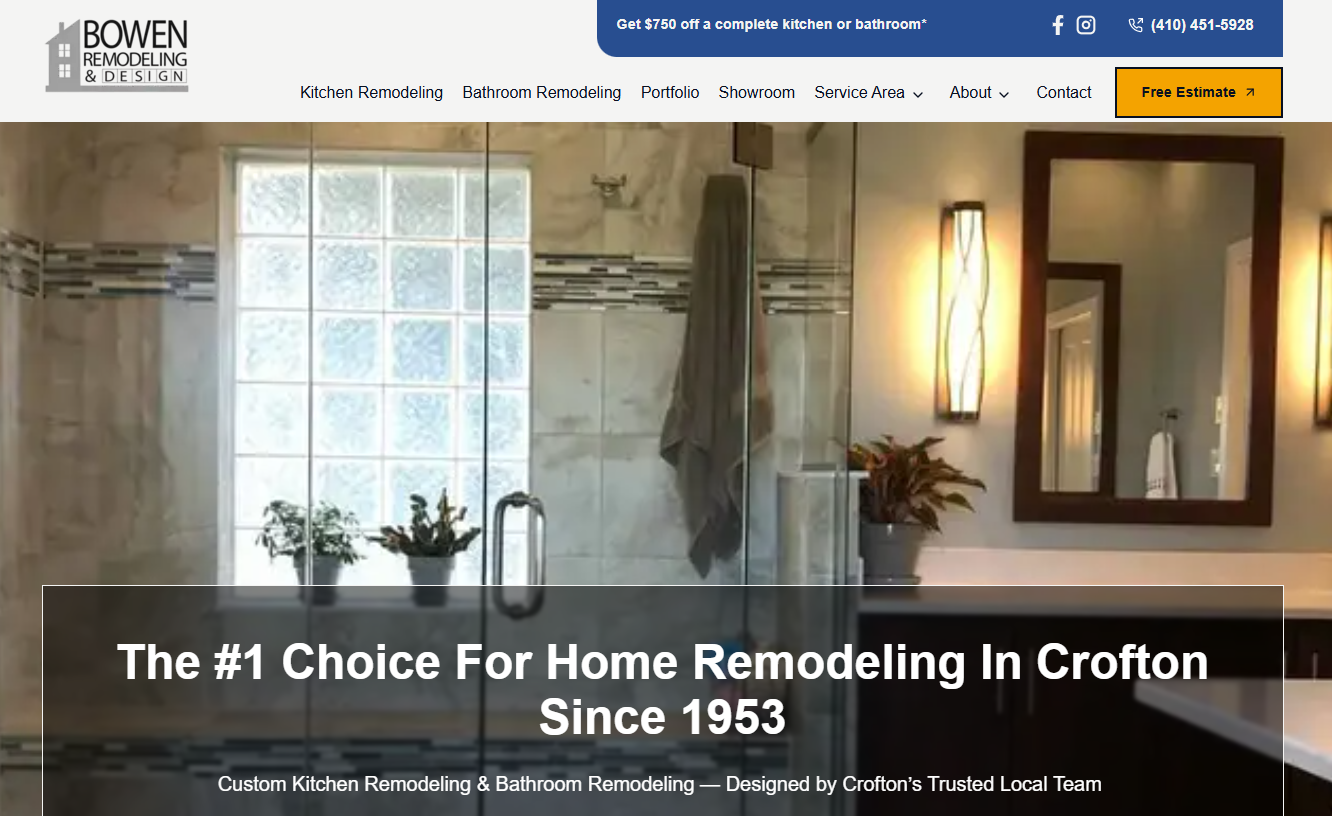
Your website is where serious homeowners decide whether to contact you.
It needs to do more than look good. It needs to clearly show what you do, where you work, and why someone should trust you with their home.
For remodelers, that usually means having dedicated pages for your main services — kitchen remodeling, bathroom remodeling, basement finishing, and additions — along with clear location relevance.
Strong websites answer questions before the homeowner asks them. They show real work, explain the process, and make it easy to take the next step.
Weak websites leave too many gaps, which causes potential customers to keep searching.
5. Build ongoing SEO and authority over 2–4 months
SEO is where things start to compound.
This is not about publishing random content or chasing rankings. It is about steadily building authority around the services and locations that matter to your business.
Over time, that includes:
- Stronger service pages
- Better visibility in Google Maps
- More consistent review activity
- Improved positioning in organic search results
Most remodelers start to see meaningful movement within a few months, depending on their market and starting point.
The key difference is ownership. Paid ads stop when you stop spending. SEO continues to build value.
6. Use strategic PPC only when there is a system behind it
Google Ads can be effective, but only when it is supported by the right structure.
Without clear tracking, strong landing pages, and a defined follow-up process, PPC often turns into expensive guesswork.
When it is used correctly, it can help:
- Promote specific services like kitchen or bathroom remodels
- Fill gaps in slower seasons
- Expand into nearby areas
The mistake is trying to use Google Ads as the foundation instead of as a tool within the system.
That is why the google lsa vs google ads conversation often misses the point. It is not about choosing one — it is about using each in the right role.
FAQs
Are Local Service Ads better than Google Ads for remodelers?
They can be helpful for generating initial leads, especially because of the pay per lead structure.
But they offer less control than Google Ads. Google Ads allows for more precise targeting, better control over messaging, and more flexibility in how campaigns are structured.
The better question is which one is producing qualified leads that actually turn into projects.
Can remodelers run Local Service Ads and Google Ads at the same time?
Yes, and in many cases they should.
Each serves a different purpose. LSAs can help with direct inquiries, while Google Ads can support more targeted campaigns.
The key is making sure both are tracked properly so you can see what is actually producing results.
Why did Google Ads get clicks but no remodeling jobs?
This usually comes down to intent and tracking.
If the campaign targets broad or low-intent searches, the clicks may not be coming from homeowners ready to move forward. If the landing page does not build trust, they may leave. And if the follow-up process is weak, good opportunities may be missed.
Clicks alone do not tell the full story.
Is Google LSA cheaper than Google Ads?
Sometimes it appears that way because you are paying for leads instead of clicks.
But cost per lead is not the most important number. Cost per signed job is.
A cheaper lead that never turns into work is not actually cheaper.
Should a remodeling company invest in SEO if it is already paying for ads?
Yes.
Ads provide short-term visibility. SEO builds long-term control.
Over time, strong organic presence and Google Maps visibility reduce dependence on paid channels and create more consistent lead flow.
Where Hector Fits
Hector helps remodelers connect marketing spend to booked jobs
Most marketing stops at activity — clicks, impressions, traffic.
Hector focuses on what happens after that:
- Which calls are qualified
- Which leads turn into estimates
- Which estimates turn into signed jobs
That is how remodelers gain clarity and make better decisions.
The focus is stability, not hype
There is no single channel that solves everything.
The goal is to connect:
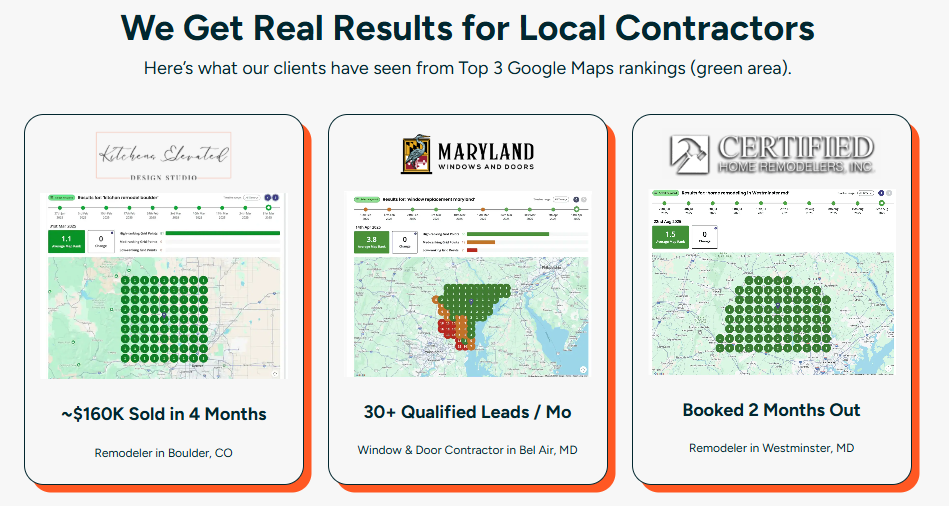
- Google Maps visibility
- Reviews
- Local Services Ads
- Local SEO
- Tracking and reporting
- Strategic use of PPC
That is what creates a predictable system.
Closing Story From the Field
A remodeler who stopped judging marketing by clicks
A remodeling company had tried everything most contractors try — referrals, Google Ads, Local Services Ads, and shared leads.
But they still could not clearly answer what was actually driving their business.
Once tracking improved, everything changed.
Instead of guessing, they could see which sources led to real estimates and signed jobs. That shifted how they looked at marketing completely.
They stopped asking how many leads they were getting and started asking which leads were actually worth pursuing.
That is when things became more stable.
Want a Clearer Picture of What Is Actually Driving Your Remodeling Leads?
Low-pressure CTA
If you are still trying to decide between local service ads vs google ads, it is worth stepping back and looking at the full picture.
Where are your leads coming from?
Which ones are qualified?
Which ones turn into real jobs?
If you want help making sense of that, we are here to walk through it with you.
No pressure, just clarity.
More From Us: