
How to Grow a Landscaping Business Without Relying on Referrals or Shared Leads
If you’re trying to figure out how to grow a landscaping business, you’re probably not struggling because of the work itself.
You already:
- Run efficient job sites
- Deliver solid landscaping services
- Have satisfied customers who refer you
But your reality still looks like this:
- One month: fully booked with patio installs, lawn care routes, and drainage projects
- Next month: gaps in the schedule and uncertainty about cash flow
That’s where most business owners get stuck.
It’s not a skill problem.
It’s not a work ethic problem.
It’s a lead flow and control problem.
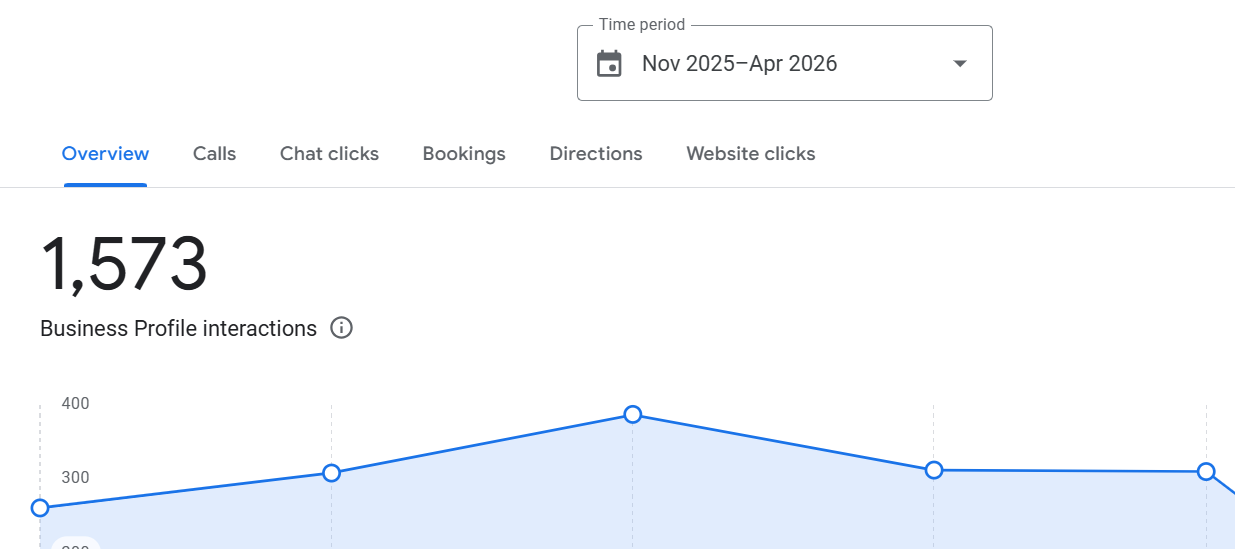
The Real Issue: You Don’t Control Where Your Work Comes From
Most landscaping companies rely on a mix of:
- Word of mouth
- Existing customers and repeat business
- Shared lead platforms
- Occasional Google Ads
- Inconsistent digital marketing
And while all of these can bring in work, none of them give you consistent control.
That’s why your cash flow, profit margins, and even your hiring decisions feel unstable.
If you want to grow your landscaping business, you need more than random leads.
You need a system that consistently brings in the right potential customers in your service area, supports your business model, and protects your desired profit margin.
Why Most Landscaping Lead Sources Eventually Stop Working
1. Referrals Are Valuable — But They’re Not a Growth Strategy
Referrals from satisfied customers and existing clients are some of the best leads you can get.
They:
- Close faster
- Trust you more
- Often lead to loyal customers
But they’re unpredictable.
You can’t control when referrals happen.
You can’t scale them on demand.
You can’t plan your annual revenue around them.
That’s why relying on word of mouth alone keeps most landscaping businesses stuck in a cycle of busy and slow periods.
2. Shared Leads Turn Into Price Competition
Shared lead platforms promise lead generation, but they come with a trade-off.
You’re not the only one getting that lead.
For common landscaping jobs like:
- Paver patios
- Retaining walls
- Lawn care services
- Irrigation repairs
Homeowners are often comparing multiple landscaping companies at once.
That changes the conversation.
Instead of:
- “Are you the right company?”
It becomes:
- “Who is cheaper?”
And over time, that erodes your profit margins and trains your business to compete on price instead of value.
3. Google Ads Can Generate Leads But Often Without Clarity
Many landscaping business owners try Google Ads as part of their marketing efforts.
And it can work.
But without proper tracking and structure, it often leads to:
- Rising costs
- Mixed lead quality
- Weak connection between spend and results
- Unclear ROI
Without a clear system, you’re spending money without knowing what actually turns into booked landscaping jobs.
4. Marketing Agencies Often Focus on Activity, Not Results
A lot of marketing reports look impressive.
They show:
- Traffic
- Clicks
- Rankings
But they don’t answer the real questions:
- How many new customers did we get?
- Which leads turned into jobs?
- What improved our cash flow?
That disconnect is why many landscaping business owners feel burned by marketing.
Because random spikes in activity don’t create sustainable growth.
Where Landscaping Leads Actually Come From Now
If you want to understand how to grow landscaping business today, you have to look at how homeowners actually make decisions.
They don’t scroll social media hoping to find a landscaper.
They search when they need one.
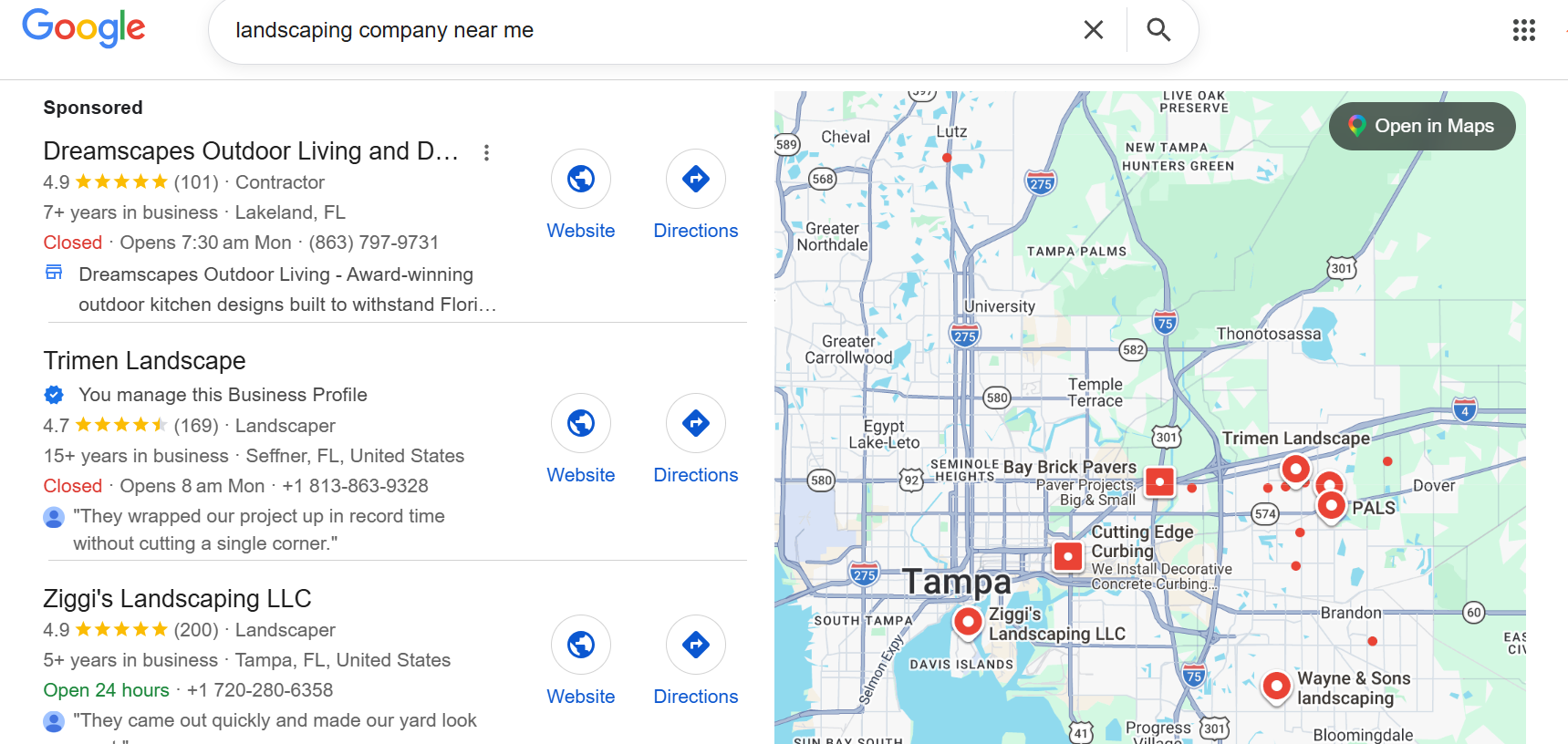
Google Search & Maps Are the Modern Billboards
When homeowners are ready, they search:
- “landscaping company near me”
- “retaining wall contractor [city]”
- “lawn care service near me”
- “yard drainage contractor”
These are high-intent searches from potential customers who are ready to move forward.
Your visibility in your service area is what determines whether your business shows up in those moments.
And that’s where your Google Business Profile becomes critical.
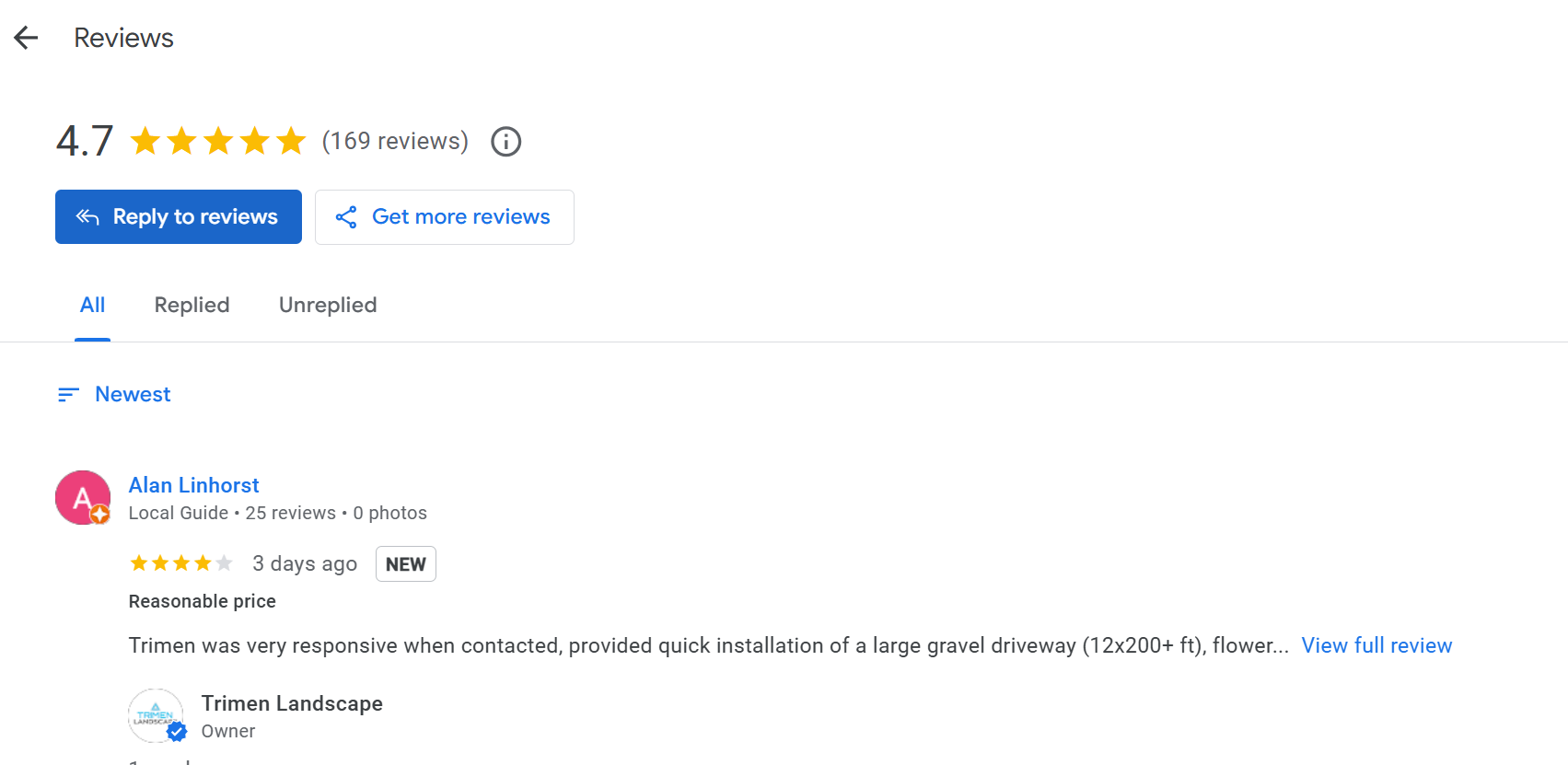
Reviews and Proof Drive Decisions Before the First Call
Before someone contacts your company, they are already evaluating:
- Your reviews
- Your project photos
- Your completed landscaping jobs
- Your service descriptions
- Your professionalism
They want to feel confident before they ever speak to you.
This is why strong online proof often outperforms even great sales conversations.
Homeowners Are Looking for Certainty — Not Options
Most homeowners don’t want to compare five landscaping companies.
They want to pick one that feels right.
That means:
- clear services
- strong reviews
- consistent presence
- visible experience
When your visibility is built properly, you’re not chasing leads.
You’re being chosen.
How Visibility Turns Into Real Landscaping Jobs
Getting visible is only part of the equation.
What matters is how that visibility turns into actual work.
The Real Flow: From Search to Revenue
When your system is working, the process looks like this:
- A homeowner searches for a landscaping service
- Your business appears in results
- They see reviews, photos, and proof
- They contact you
- Your team handles the lead well
- You estimate and close the job
This is where lead generation becomes predictable instead of random.
Better Visibility Changes the Type of Customers You Attract
This is one of the biggest shifts in growing a landscaping business.
Instead of price shoppers, you start getting:
- homeowners ready to move forward
- clients who value quality
- customers interested in specific services
That leads to:
- better jobs
- stronger margins
- more efficient use of your team
Tracking Turns Growth Into a Repeatable System
Without tracking, everything feels like guesswork.
With proper systems, you can see:
- which marketing efforts bring leads
- which leads turn into estimates
- which jobs actually close
- what improves profit margins
That’s how you build real growth strategies instead of guessing.
Growth Isn’t Just Marketing — It’s Operations Too
If your business grows but your systems don’t, things break.
That’s why streamline operations is just as important as lead generation.
Strong landscaping businesses invest in:
- customer management
- job costing
- inventory management
- customer communication
- maintenance schedules
- tracking actual costs
- improving job completion consistency
This is where business management software or landscape business management software can help.
The right tools support:
- scheduling
- quoting
- CRM
- reporting
- comprehensive financial reporting
They don’t replace good management — they support it.
Retention Is One of the Most Overlooked Growth Levers
Many landscaping business owners focus only on new leads.
But growth also comes from:
- existing customers
- repeat business
- long-term maintenance clients
- reactivating inactive customers
Strong customer retention reduces your need to constantly chase new customers.
It also stabilizes your revenue across seasons.
That’s where strategies like:
- bundled services
- seasonal services
- off season services
- maintenance programs
can make a big difference.
Building a Business That Actually Scales
If you look at successful landscaping companies, they don’t just do more marketing.
They build better systems.
They:
- hire employees carefully using a well documented hiring process
- invest in employee retention and career development
- build teams with strong technical skills
- create consistent processes across the company
- sometimes offer comprehensive training programs
- focus on attracting qualified and motivated people
Because growth is not just about getting more customers.
It’s about being able to handle that growth profitably.
What This All Leads To
At a certain point, most landscaping business owners realize:
This is not about finding one new tactic.
It’s about building a system that connects:
- visibility
- trust
- lead generation
- sales process
- operations
- customer retention
That’s how a landscaping business moves from:
- inconsistent months → predictable work
- price competition → better positioning
- unstable cash flow → controlled growth
And that raises the real question:
How do you actually build that system step by step?
That’s exactly what we’ll break down next.
Absolutely — here is the second half rewritten in a cleaner blog-post format, with stronger structure, better readability, and a few useful tables woven in naturally.
The Hector 6-Step Predictable Lead System for Growing a Landscaping Business
If you want a real answer to how to grow a landscaping business, it helps to stop thinking in isolated tactics and start thinking in sequence.
A lot of landscaping business owners jump between referrals, Google Ads, random digital marketing, and word of mouth without a clear system tying it together. That usually creates movement, but not predictability.
The better approach is to build a lead generation system in the right order.
That is how a landscaping business becomes easier to grow, easier to measure, and easier to manage without depending on outside platforms for every new opportunity.
1) Optimize your Google Business Profile for the landscaping jobs you actually want
For most landscaping businesses, this is one of the fastest ways to improve visibility.
Your Google Business Profile is often the first thing potential customers see when they search for landscaping services in your service area. If that profile is weak, outdated, or too broad, you end up attracting the wrong leads or missing the right ones.
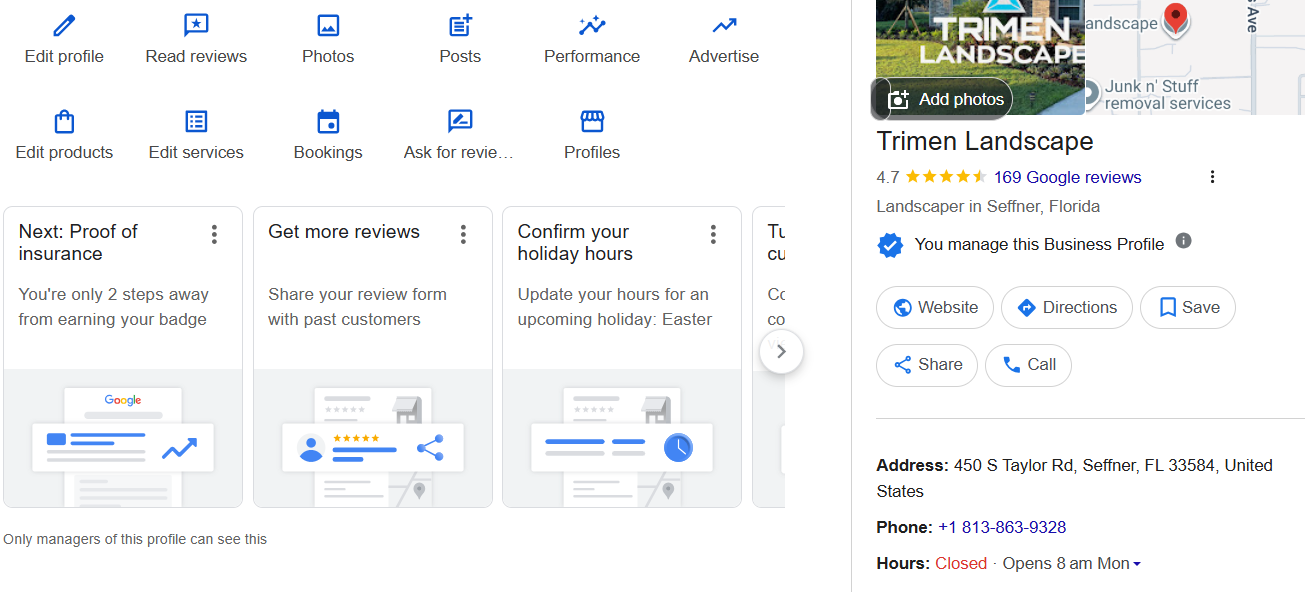
A strong profile should clearly reflect the work you want more of. That might mean patio installs, drainage solutions, lawn care, irrigation work, outdoor lighting, or design-build projects. Your photos should show finished work, not random job site pictures with no explanation. Your service descriptions should sound like real homeowner problems, not generic marketing copy.
What to improve in your Google Business Profile
| Area | What matters | Why it helps |
|---|---|---|
| Business categories | Use accurate primary and secondary categories | Helps Google understand your specific services |
| Service list | List the actual services you want to sell | Improves relevance for better-fit searches |
| Service area | Make your coverage clear | Helps local homeowners know you serve them |
| Photos | Show completed projects, not just crews or equipment | Builds trust faster |
| Reviews | Ask consistently, not occasionally | Improves conversion and local visibility |
| Updates | Add fresh posts and project activity | Signals that the business is active and established |
2) Build a steady review system that makes homeowners trust you faster
Reviews are not just a reputation asset. They are part of your sales system.
Before a homeowner ever calls your company, they are deciding whether your business feels safe, established, and professional. That is especially true in the landscape industry, where homeowners are often comparing multiple landscaping companies for work that can cost thousands of dollars.
That is why review consistency matters so much. A steady stream of reviews is usually more valuable than asking once in a while when someone remembers.
The best reviews for a landscaping business are specific. They mention the kind of project you completed, the quality of the work, how your team handled customer communication, and whether you finished on time. Those details help future buyers trust you faster.
Good review requests usually happen after:
- A successful install
- A completed cleanup
- A drainage issue is solved
- A major design-build project wraps up
- A maintenance customer sees consistent results
This is something most owners can improve immediately.
3) Launch Local Services Ads for faster traction while organic visibility builds
Local Services Ads can be useful, especially when you need earlier traction while your local SEO work is building.
This is not the foundation of the system. It is support.
If you are trying to grow your landscaping business, LSA can sometimes help generate early calls faster than SEO alone, especially when your profile and reviews are already strong. In the right market, it can start producing traction in about 1 to 3 weeks.
But it works best when it sits on top of a solid base. If your profile is weak, your reviews are thin, or your follow-up is poor, paid visibility will not fix those problems.
4) Build and optimize your website for Local SEO, not just looks
A lot of landscaping websites look decent. That is not the same as being useful.
If you want to understand how to grow your landscaping business, your website needs to function like an asset, not an online brochure. It should support ownership, help your business rank, and make it easier for homeowners to trust you and contact you.
That means building pages around your core services and your target cities. It also means showing real work, using clear messaging, and making your quote process easy to understand.
A strong landscaping website usually includes service pages, city or town pages, project galleries, proof from reviews, and a clean contact path. It should support your sales process, not just your image.
5) Invest in ongoing SEO and authority building for compounding growth
This is where growing a landscaping business starts to feel less fragile.
SEO is not instant. But when it is built correctly, it compounds. That matters because compounding visibility is very different from rented attention. It keeps working after the ad spend stops. It supports sustainable growth. It helps the business grows on an owned foundation.
For a landscaping company, ongoing SEO usually means improving service-page depth, strengthening internal links, publishing localized content, adding project proof, earning citations, building review momentum, and keeping your Google Business Profile active.
This is also where many successful landscaping companies separate themselves. They stop restarting from zero every month. Instead, they build assets that continue to improve over time.
Meaningful traction often starts building within 2 to 4 months, and then the results can compound if the work stays consistent.
Short-term vs long-term channels
| Channel | Speed | Ownership | Best use |
|---|---|---|---|
| Referrals | Unpredictable | Low | Bonus source |
| Shared leads | Fast | None | Short-term only |
| LSA | Fast | Medium | Early traction |
| Google Ads | Medium-fast | Low-medium | Strategic scaling |
| Local SEO | Slower | High | Long-term growth |
| Google Business Profile | Fast-medium | High | Core visibility asset |
6) Use strategic PPC only when you want to scale, fill gaps, or expand service lines
PPC should be a tool, not a crutch.
There are situations where Google Ads make sense for a landscaping business. Maybe you are entering a new town in your service area. Maybe you want more high-ticket work. Maybe you are trying to fill a gap in the schedule or promote seasonal services or off season services. Maybe you want to support a newer service like drainage, lighting, or a focused lawn care offer.
That is where paid traffic can be useful.
But it should come after the basics are in place. If your website does not convert, your tracking is weak, and your follow-up is inconsistent, PPC usually just makes the leaks happen faster.
FAQs
Can I grow my landscaping business if referrals are still my main source of work?
Yes. Referrals are valuable. The goal is not to eliminate them. The goal is to stop depending on them as the only growth engine.
When referrals are supported by stronger owned visibility, your business is less exposed to random slow periods and easier to plan around.
How long does it take to grow a landscaping business with SEO and Google Maps?
Some improvements can create movement quickly, especially around your Google Business Profile, reviews, and better local positioning. More meaningful SEO traction usually takes a few months to build.
That is why the timeline matters. Quick wins help. Compounding assets matter more.
Are shared lead platforms ever worth using for landscapers?
They can create short-term activity, but they usually come with lower control, more price-shopping, and weaker long-term value. They are not a strong foundation for a landscaping business that wants better cash flow, healthier profit margins, and better-fit jobs.
What is the best way to grow a landscaping business in a small or mid-sized city?
Usually, it is by owning your visibility in the market you already serve. That means showing up in local search, building trust through reviews and proof, and tracking what turns into booked work.
Smaller markets are often more winnable than owners think.
Should I focus on lawn care leads or bigger installation jobs?
That depends on your crew structure, capacity, margins, and goals. A lawn care company may value route density, retention, and recurring revenue. A design-build company may care more about larger project value and fewer, better leads.
The key is aligning your visibility strategy with the work you actually want more of.
How do I know whether my marketing is actually working?
Track source, calls, forms, estimates, close rate, and booked jobs. That is what tells you whether your marketing strategy is helping the business or just creating activity.
Where Hector Fits in If You Want to Grow Your Landscaping Business the Right Way
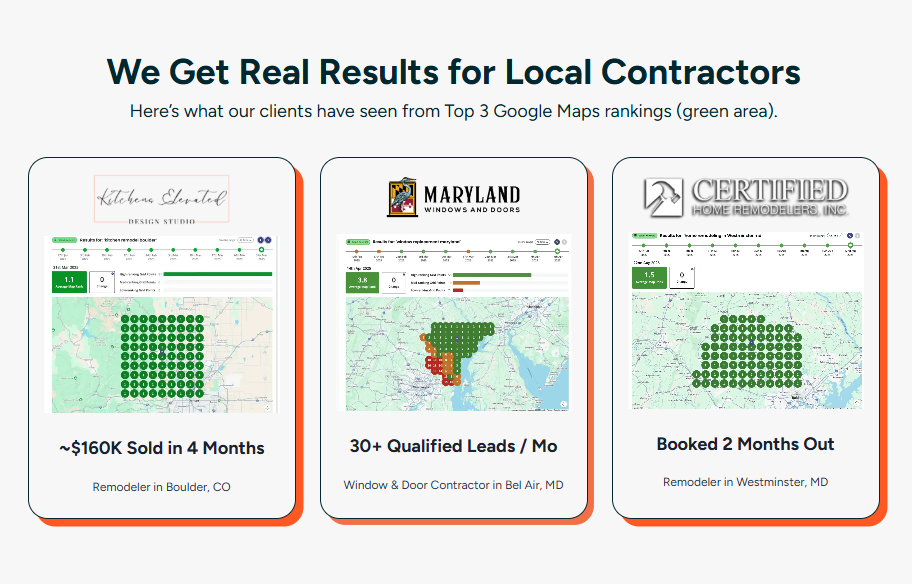
Hector helps landscaping contractors build owned lead systems, not rent attention
If you are serious about how to grow my landscaping business without staying dependent on shared leads, referrals, or random campaigns, this is where Hector fits.
We help landscaping business owners build systems around Maps visibility, reviews, local SEO, call tracking, booked-job reporting, and selective paid channels when they actually make sense. The point is not to create more noise. The point is to help your business generate more qualified homeowners through channels you actually control.
That matters because a lot of contractors do not need more activity. They need more clarity. They need a system that supports cash flow, better lead quality, and long-term growth without relying on a platform they do not own.
The right partner should make marketing simpler, not harder to trust
A good partner should help inform growth strategies, not bury the owner in dashboards and vague explanations.
That means tying visibility to real opportunities, keeping reporting tied to booked jobs, and building around what supports the business long term. It also means respecting the reality of day to day operations, staffing, estimates, and the pressure owners feel when the phone slows down.
This should feel simpler, not more complicated.
A Landscaping Growth Story From the Field
What changed when one landscaping company stopped chasing random leads
One landscaping company we think about here had a familiar problem.
They did strong work. Their team was capable. They had satisfied customers, some good word of mouth, and enough reputation to stay busy during certain stretches. But outside those peaks, the schedule became uneven. They were leaning on referrals, occasional shared leads, and scattered marketing efforts that did not tie clearly to results.
They were not short on hustle. They were short on control.
Once they narrowed their focus, things started to change. They improved their Maps presence. They got more serious about review generation. They cleaned up their service pages so homeowners could actually understand the specific landscaping services they offered. And they tracked what happened after the lead came in, not just whether the phone rang.
That gave them a clearer view of what was producing profitable landscaping jobs, which services supported stronger profit margins, and where they were wasting time.
The result was not just more customers. It was better predictability, steadier cash flow, and a healthier growth path.
Want Clarity on How to Grow a Landscaping Business? Start by Looking at What You Actually Control
A low-pressure next step
If you are thinking seriously about how to grow a landscape business, the best place to start is not with another shiny tactic.
Start by asking a simpler question:
How much of your lead flow is actually owned, trackable, and predictable?
That question usually tells you a lot. It shows whether you are building on assets or renting attention. It shows whether your marketing strategy supports your business model. It shows whether your current approach is helping you build stronger customer retention, attract new customers, and create the kind of stability that lets a company plan ahead.
If you want help thinking that through, Hector is here to have that conversation. No pressure. No hard pitch. Just a practical look at what is working, what is not, and what would actually help grow your landscaping business in a way that gives you more control.