
Tree Service Leads: How Companies Get Targeted Customers
Tree service leads are potential customers who actively search for professional tree care services. These services often include tree removal, tree trimming, stump grinding, and emergency tree removal. Homeowners and property managers usually look for these services when trees become damaged, overgrown, or unsafe.
Most customers begin their search online using terms like tree removal near me, tree trimming services, or local tree service companies. Businesses that rank in search results, local listings, and paid ads attract the majority of these high intent customers. By using local SEO, targeted advertising, and optimized service pages, tree care companies can generate consistent tree service leads and connect with property owners who need reliable tree maintenance and removal services.
But most of the times the leads are not what contractors expect.
Most tree service contractors know the feeling.
A storm rolls through town and suddenly the phone doesn’t stop ringing. Homeowners need emergency tree removal, broken limbs cleared, or trees taken off roofs. Your crew is booked out for days. Equipment is running nonstop. You might even turn down work because the schedule is full.
Then two weeks later, the phone is quiet.
The storm work is finished. Referrals slow down. The calendar has gaps. And now you’re wondering what changed.
Do you spend more on advertising?
Turn on Google Ads?
Lower prices to win more jobs?
Or do you just wait and hope the next referral comes through?
For many tree service business owners in small and mid-sized markets, this cycle repeats all year long:
Busy one month.
Slow the next.
Never quite sure where the next batch of jobs will come from.
And the frustrating part is this: the quality of your tree work didn’t change. Your reputation didn’t change. Your team didn’t suddenly get worse.
What changed was visibility.
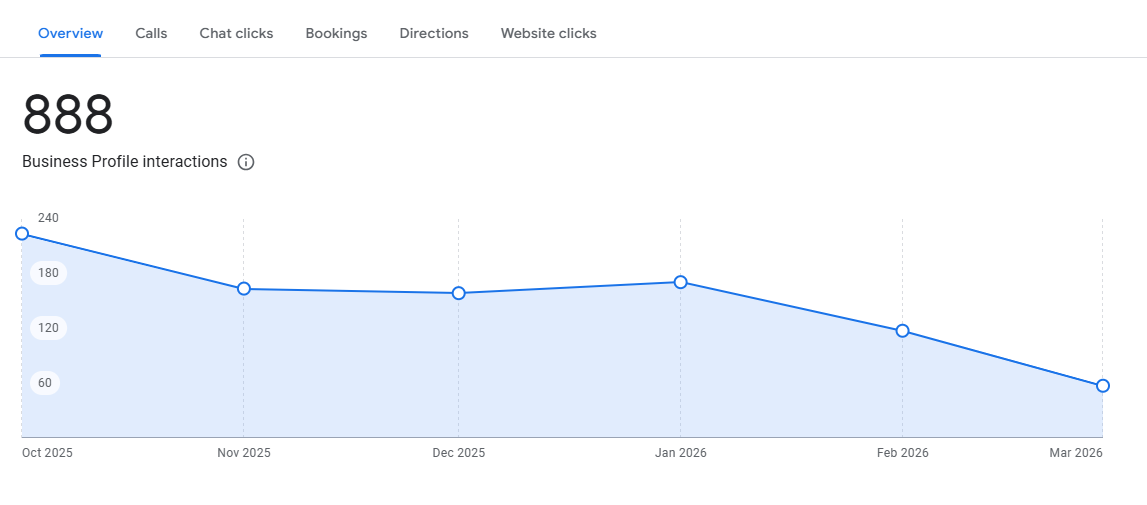
The Hidden Stress of Unpredictable Tree Leads
Many tree service companies rely on a mix of sources for tree service leads:
- Storm-driven work
- Word-of-mouth referrals
- Lead platforms
- Occasional advertising
Each one can produce jobs. But none of them create stability.
Storms bring spikes.
Referrals arrive randomly.
Lead platforms send inconsistent opportunities.
That’s why so many contractors feel stuck in a feast-or-famine cycle.
One owner we spoke with described it this way:
“After a storm we’re slammed with tree removal jobs. Two weeks later we’re calling past customers just to fill the schedule. It makes planning crews and equipment really tough.”
This unpredictability is exactly why many contractors start looking for tree leads from outside platforms or marketing agencies.
But the real issue usually isn’t a lack of leads.
The issue is where those leads come from.
Consistent tree service leads rarely come from chasing the next lead source.
They come from being visible when homeowners are actively searching for help.
And today, that search almost always starts in one place: Google.
Why Most Tree Lead Sources Stop Working Over Time
Many tree service companies try multiple lead generation approaches over the years.
Some work for a while. Some bring a few good jobs. Others burn through budget quickly.
But most of them share the same underlying problem: they don’t create control.
Let’s look at why.
Shared Lead Platforms Create Price Shopping
Platforms like Angi, HomeAdvisor, and Thumbtack promise fast access to homeowners who need tree work.
In theory, this sounds like a simple way to generate tree removal leads.
In practice, the system works very differently.
Most of these platforms send the same lead to multiple contractors at the same time.
That means a homeowner requesting tree removal might receive calls from three or four tree service companies within minutes.
Now the conversation changes.
Instead of:
“Can you come look at this tree and give me your recommendation?”
The conversation becomes:
“Another company said they could do it for $300 less.”
This turns what should be a professional service conversation into a price competition.
Many contractors notice the same pattern:
- The leads are rushed
- Homeowners are talking to multiple companies
- Price becomes the deciding factor
That’s not how most tree service business owners want to operate.
When you’ve invested in equipment, insurance, training, and safety, racing to the lowest price rarely brings the kind of tree service leads that turn into profitable jobs.
Google Ads Can Get Expensive Quickly
Another common strategy is running Google Ads.
And to be fair, Google Ads can produce tree removal leads.
The challenge is cost and tracking.
Many contractors turn on ads, set a daily budget, and assume the calls will start coming in.
But without proper tracking tools in place, it becomes difficult to answer important questions:
- Which ads actually produced customer calls?
- Which keywords generated real jobs?
- Which campaigns just burned budget?
Google Ads often delivers traffic, but without clear tracking tied to booked work, it’s easy to spend thousands without knowing the real return.
That’s why some contractors feel frustrated after running ads for a few months.
They know money went out.
But they can’t clearly connect that spend to tree service leads that turned into real jobs.
Referrals Are Valuable But Unpredictable
Referrals are still one of the best sources of tree service leads.
A homeowner who hears about your company from a neighbor or friend already trusts your work.
Those jobs tend to close faster and often lead to repeat business.
The problem is simple: you can’t control when referrals happen.
One week a past customer recommends you to three neighbors.
The next month, nothing.
Many tree service contractors rely on referrals as their primary marketing engine. But referrals alone rarely provide a predictable flow of new customers.
They’re valuable, but they’re not a system.
Trade Shows and Local Events Create Temporary Spikes
Home shows and community events can introduce your company to homeowners in your local market.
You might collect contact information, hand out flyers, and book a few estimates.
But these events often generate early-stage interest, not immediate work.
Homeowners might be researching landscaping or long-term yard improvements. The tree trimming job may not happen for months.
So while these events can help build awareness, they rarely create consistent tree leads week after week.
The pattern becomes clear across most traditional approaches:
They create bursts of activity, not predictable demand.
Spikes are helpful.
But spikes are not systems.
Where Tree Service Leads Actually Come From Today
If you want to understand where consistent tree service leads come from today, the answer is surprisingly simple.
Homeowners search.
When someone notices a damaged tree, a fallen branch, or a tree leaning toward the house, they don’t open a phone book or wait for a referral.
They pull out their phone and search.
Homeowners Search When They’re Ready to Hire
These searches happen every day in local markets:
- “tree removal near me”
- “emergency tree service”
- “tree trimming service near me”
- “licensed arborist near me”
These are not casual searches.
They’re problem-solving searches.
A homeowner with a tree leaning toward the house isn’t browsing for fun. They’re trying to find a company that can solve the problem quickly and safely.
That’s why appearing in these search results tends to generate some of the most qualified tree service leads a company can get.
The homeowner already has a problem. They’re looking for a professional to handle it.
Google Maps Is Where Contractors Win Local Visibility
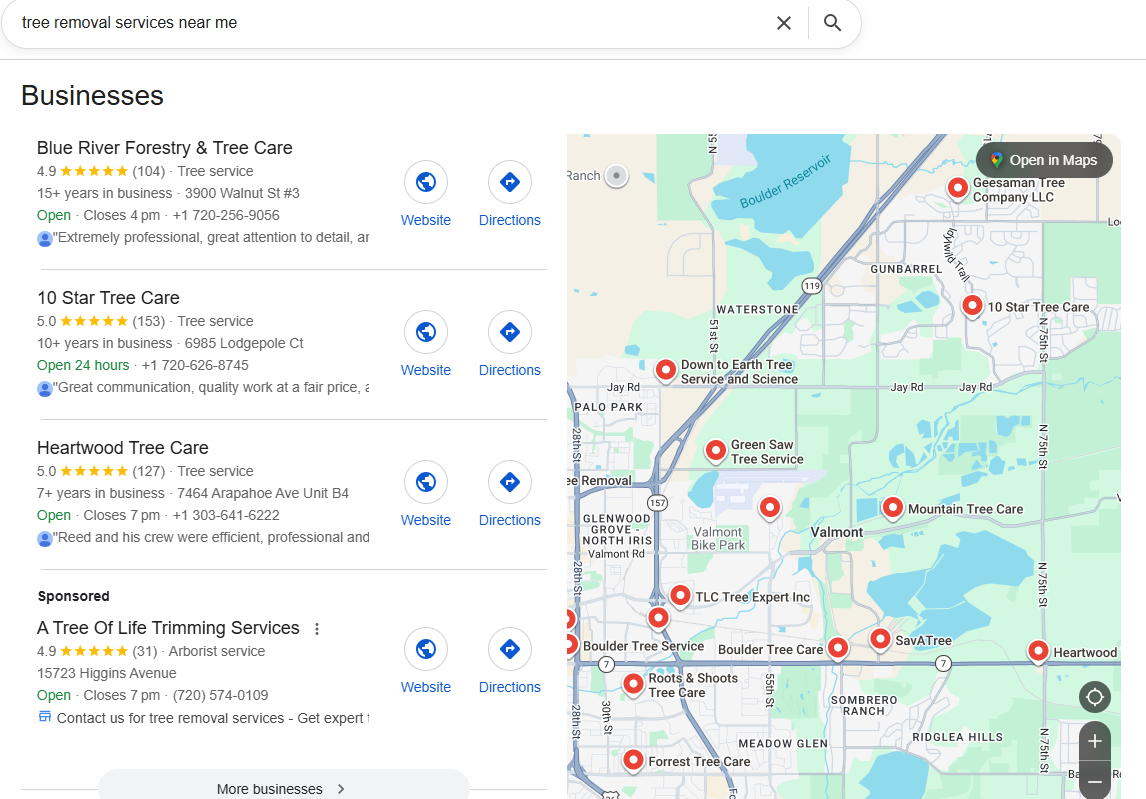
When homeowners perform a search like “tree service near me,” Google usually shows a map with three local companies at the top of the page.
This section is often called the local map pack.
For many tree service contractors, this is where the majority of calls originate.
Homeowners quickly scan:
- Star ratings
- Number of reviews
- Photos of past tree work
- Business profile details
And then they click or call one of the companies listed.
The companies that appear here consistently tend to receive far more tree leads than competitors who are buried further down the search results.
Reviews and Proof Drive the Final Decision
Tree removal and tree care are not small purchases.
Homeowners are trusting someone to bring heavy equipment onto their property, work near their house, and safely remove large trees.
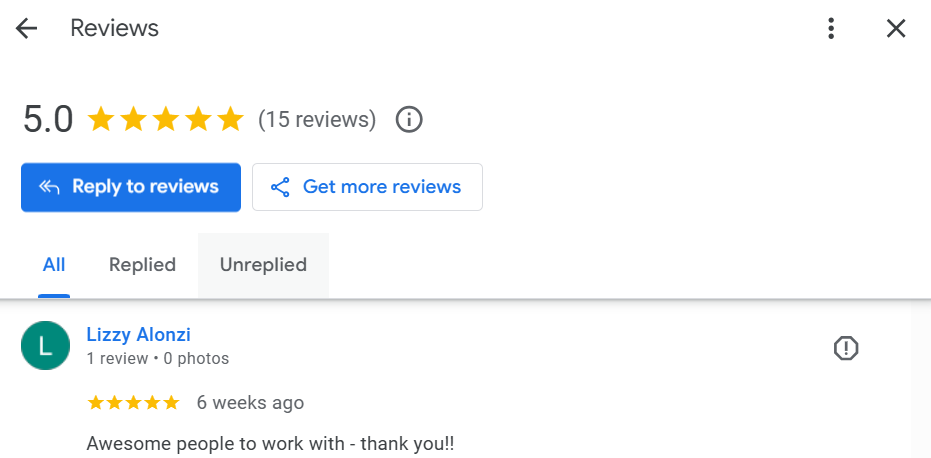
That’s why reviews play such a powerful role.
Before calling a tree service company, most homeowners check:
- The star rating
- The number of reviews
- Photos from completed jobs
- How the company responds to feedback
A strong review profile signals professionalism and reliability.
It tells potential customers that other homeowners had a good experience.
How Google Visibility Turns Into Real Tree Removal Leads
Being visible in search results is important.
But visibility alone doesn’t create jobs.
What matters is how that visibility builds trust and turns into real customer calls.
Visibility Creates Trust Before the Phone Rings
When a homeowner sees a tree service company with:
- 100+ positive reviews
- Photos of real tree removal jobs
- A complete Google Business Profile
- Clear service descriptions
They begin trusting that company before even picking up the phone.
This pre-call trust is one of the reasons organic search leads often outperform shared platform leads.
Instead of competing with three other contractors simultaneously, you’re often speaking with a homeowner who already chose your company.
That dramatically improves lead quality.
A Typical Homeowner Decision Journey
Most tree removal jobs follow a simple decision path.
A homeowner notices a problem.
Maybe a large branch broke during a storm. Maybe a tree is leaning dangerously close to the house.
They grab their phone and search.
They see a list of tree service companies in the search results.
They open a few profiles, read reviews, and look at photos.
Within minutes, they decide which company feels the most trustworthy.
Then they call.
This entire process often takes less than ten minutes.
Which means the companies visible in those search results receive the call.
The companies that aren’t visible never even get the chance.
Real Contractor Example
One tree service contractor we spoke with had relied heavily on Angi leads for several years.
The company was good at the work itself, but the leads were frustrating.
Homeowners often contacted multiple companies at once, and the conversation quickly turned into price comparisons.
Eventually, the owner focused on improving visibility in Google search and maps.
Over time, the company began receiving more calls directly from homeowners who found them through search.
The difference was noticeable.
Instead of competing with several contractors at once, the company was often the first call homeowners made.
That shift dramatically improved both lead quality and close rates.
At this point, most contractors start asking the same question:
If Google search is where homeowners are looking…
how do you actually build visibility there in a reliable way?
That’s where the conversation shifts from random marketing tactics to a structured lead generation system — the kind that turns search visibility into steady tree service leads week after week.
And that system is what we’ll break down next.
The Hector 6-Step Predictable Tree Lead System
If the goal is consistent tree service leads, the answer is not one campaign or one batch of tree leads.
It is a system.
Each part helps your tree service business create better visibility, stronger trust, and more reliable customer calls over time. Some steps can improve things quickly. Others build long-term assets that keep producing quality tree service leads in your local market.
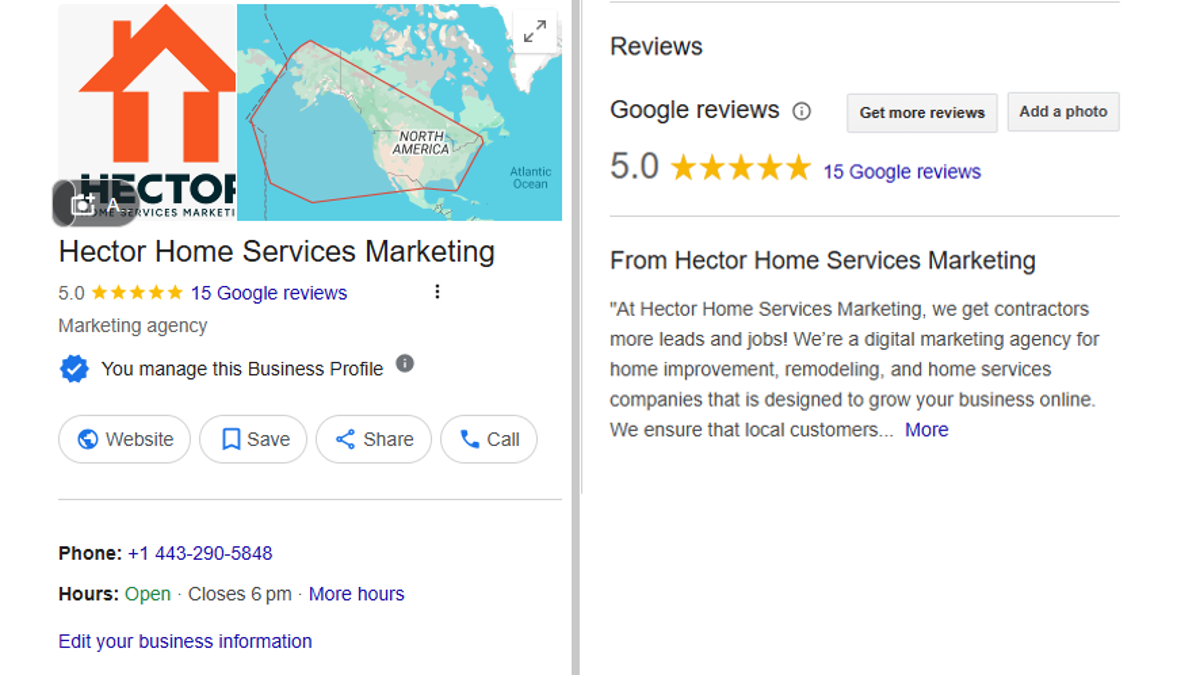
Step 1 — Optimize Google Business Profile
For most tree service companies, this is the fastest place to start.
Your Google Business Profile and business profile are often the first things homeowners see in search results. If your business listing is incomplete or outdated, you lose trust before the phone rings.
Focus on:
- Correct categories
- Accurate business hours
- Clear service area
- Real photos of tree work
- Service descriptions tied to what homeowners search for
This is one of the easiest ways to improve visibility without building a whole new site first.
Step 2 — Build Consistent 5-Star Reviews
Reviews help your tree service company in two ways: they improve trust and help visibility in Google.
For tree service, the best time to ask is after:
- Tree removal
- Storm cleanup
- Trimming or pruning
- Other completed tree care jobs
The goal is consistency. A steady flow of reviews builds more trust than a one-time push. Strong reviews also improve lead quality because potential customers feel more confident before they call.
Step 3 — Launch Local Services Ads (LSA)
LSA can help generate tree removal leads and service leads faster than SEO.
Benefits include:
- Pay-per-lead instead of pay-per-click
- Placement above normal search results
- Faster traction, often within 1–3 weeks
- Potential Google Guaranteed visibility
For many contractors, this is a practical way to get early momentum. But it still works best as part of a broader lead generation system, not as the whole plan.
Step 4 — Build & Optimize Website for Local SEO
Your website becomes the long-term engine behind more tree service visibility.
It should clearly explain your services, service areas, and why homeowners should trust your company. For a tree service business, that usually means pages for:
- Tree removal
- Emergency tree service
- Trimming
- Stump grinding
- City-specific services in your market
You do not need a flashy site. You need a site that matches homeowner intent, supports your business profile, and helps turn search traffic into more calls and more clients.
Step 5 — Ongoing SEO & Authority Building
This is where growth compounds.
Done right, SEO helps your tree service company appear for the searches that bring in high quality tree service inquiries. That includes service searches, city searches, and urgent homeowner searches.
Typical timeline:
- Early traction in 2–3 months
- Stronger growth in 4–6 months
This step takes longer, but it creates owned visibility. Unlike rented leads, these tree service leads are not being sold to multiple competitors. That is what makes strong SEO so valuable for long-term lead generation.
Step 6 — Strategic PPC
Google Ads can still help, but they work best after the foundation is in place.
PPC can make sense for:
- Expanding into another service area
- Filling a slow week
- Promoting emergency services
- Supporting a strong local presence
The key is that paid campaigns should support your system, not replace it. When your Google Business Profile, reviews, and website are strong, Google Ads usually perform better and create clearer ROI.
That is the full progression.
Some steps can be handled quickly. Others take more time and the right tools or support. But together, they help owners build a steadier system for tree service leads, better quality, and more predictable growth.
FAQs
How long does it take to generate consistent tree service leads from SEO?
Usually, not overnight.
For most tree service companies, early movement can show up in 2–4 months if the foundation is being built correctly. More meaningful traction often compounds after that.
The exact timing depends on your market, the strength of your competitors, the current state of your website, your reviews, and your Google Business Profile. A small local market may move faster than a more crowded one, but the bigger point is this: SEO is not a quick burst. It is a system that builds over time.
Are tree lead platforms like Angi worth it?
They can be useful early, especially if a company needs work right now and has no stronger system in place.
But they are usually not sustainable long-term.
Most tree leads from those platforms are shared. That creates price pressure, weakens lead quality, and makes your company dependent on someone else’s platform. Some contractors use them as a stopgap. Very few want to build the whole business around them.
Should tree companies run Google Ads?
Sometimes, yes.
Google Ads can help generate leads, especially for emergency services or when expanding into a new service area. But it works best when it complements stronger organic visibility.
If your business profile is weak, your reviews are thin, and your site does not build trust, ads alone may create traffic without enough booked jobs to justify the spend. That is why many contractors feel like Google Ads should work, but the ROI stays murky.
How many reviews should a tree service company have?
There is no magic number, but there is a practical answer.
You need enough recent, credible reviews to compete with the companies showing up in your local search results. In some towns, that might mean 30 solid reviews. In other markets, it could mean 100 or more.
The better question is not “What is the perfect number?”
It is: “When a homeowner compares us to the other companies in Google Maps, do we look trustworthy?”
That is the benchmark that matters.
Where Hector Fits Into This Process
Hector’s view is simple.
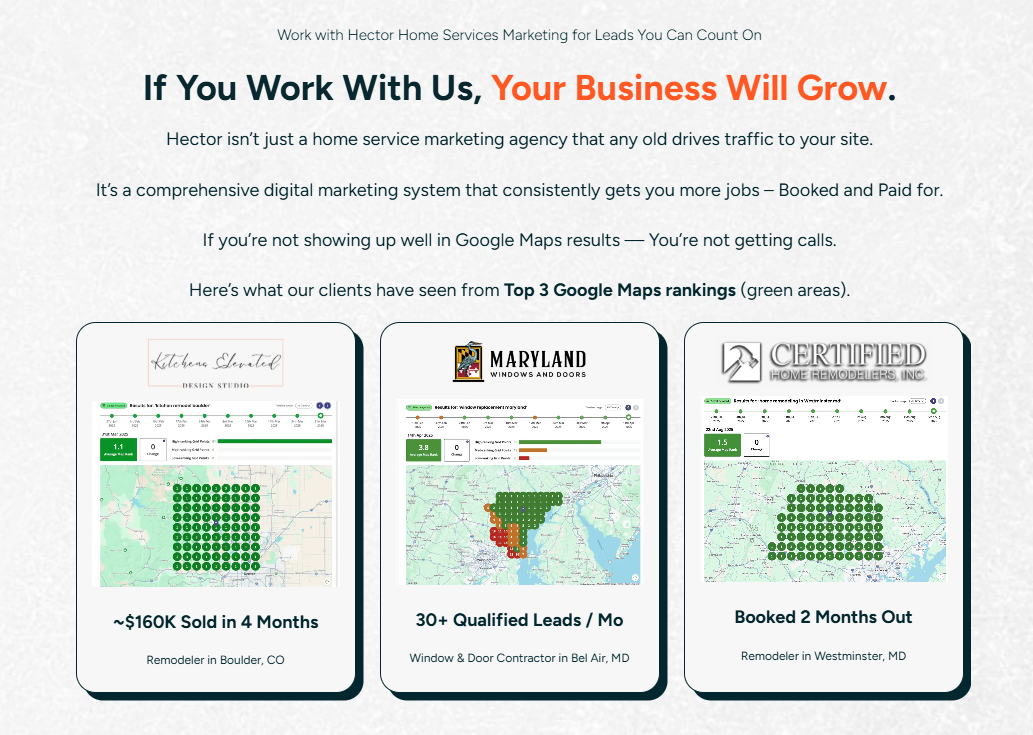
Contractors do not need more random leads. They need a system that helps them create predictable visibility, track real calls, and understand which marketing efforts are actually producing booked jobs.
That means focusing on owned assets:
- A strong Google Business Profile
- A credible website
- Consistent reviews
- Local SEO that compounds
- Tracking that ties activity back to real outcomes
It also means not hiding behind traffic reports or vague dashboards.
A good marketing partner should be able to show what is happening in plain language. Not just rankings. Not just impressions. Not just visitors. Real signals tied to lead generation, customer calls, and revenue opportunities.
That is where Hector fits best.
Not as another vendor selling noise. As a partner helping tree service contractors build a system they actually control.
A Story From the Field
One tree service company came in with a pattern that will sound familiar to a lot of owners.
They had real skill. Good crews. A strong reputation with past customers. But their lead flow came from a messy mix of referrals, shared platforms, and whatever short-term advertising happened to be running that month.
Some weeks were packed. Other weeks they were looking for ways to fill the schedule.
The company had gotten used to reacting instead of planning.
If referrals were strong, great.
If storm work hit, great.
If neither happened, stress went up fast.
They were tired of price-shopping conversations. Tired of not knowing which marketing spend was helping. Tired of feeling like every month started from zero.
What changed was not magic.
They improved visibility. They strengthened proof. They built around how homeowners actually search for tree service. Over time, the calls became steadier and the conversations improved.
Instead of fighting for every job through shared leads, they started hearing from homeowners who had already seen the reviews, looked through the photos, and decided they looked like the right company to call.
That is the real shift.
Not just more leads.
Better control. Better fit. Better predictability.
If You Want Clearer, More Predictable Tree Leads
If your tree service business is still depending on referrals, shared platforms, or short bursts of advertising to keep the phone moving, you are not alone.
A lot of good contractors are in that same spot.
The hard part is not getting a few leads. The hard part is building a system that keeps producing quality tree service leads without forcing you to start over every month.
That is what this comes down to.
Not chasing random tree leads.
Not hoping for the next storm.
Not wondering whether a batch of free tree service leads or exclusive tree service leads will somehow solve the bigger problem.
Just a clearer system built around how homeowners actually search, choose, and call.
If you want a second set of eyes on what is working, what is not, or where your biggest visibility gaps might be, Hector is here to help you think it through. No pressure. Just a practical conversation about how to build a steadier flow of tree service leads in your market.
More From Hector Blog