
How to Get Windows and Doors Leads That Actually Convert?
Windows and doors leads are potential customers who actively search for window replacement, door installation, and home improvement services. Contractors who want to grow their installation business must generate consistent leads from homeowners who plan to upgrade their windows, replace exterior doors, or improve energy efficiency.
Most homeowners begin their search online using terms like window replacement near me, door installation services, or window and door contractors. Businesses that rank in search results, local listings, and paid ads attract the majority of these high intent prospects. By using strategies such as local SEO, targeted advertising, and optimized landing pages, contractors can capture qualified windows and doors leads and convert them into profitable installation projects.
If you’ve been in the window and door business for a while, this probably feels familiar.
One month, your crews are busy with window replacement, entry systems, patio sliders, and other window and door services. Estimates are moving. The schedule looks healthy. You start thinking the pipeline is finally steady.
Then the next month, the phone slows down.
You still have some estimate requests coming in, maybe a few referrals, maybe a couple of window leads or door leads from Google Ads or a lead platform. But when you sit down and look at the numbers, it’s hard to tell what actually turned into booked jobs.
That’s where the frustration starts.
Most window and door contractors are not afraid to invest in marketing. What wears them down is spending money across different lead generation channels and still not having clear visibility into what is producing revenue.
For many contractors, the issue is not simply getting more calls.
It’s that the lead flow is built on too many outside sources they do not control.
A typical mix looks like this:
- Referrals from past customers
- Shared leads from Angi, HomeAdvisor, or similar paid channels
- Some Google Ads traffic
- Occasional home show or expo leads
Each one can bring in work. But together, they often create the same pattern: busy one month, slow the next.
That is not a growth system. That is a spike-and-drought cycle.
A lot of window and door companies live in that cycle longer than they should because each source feels useful in the moment. Referrals are valuable. Paid channels can create activity. Home shows can produce a burst of interest.
But none of that gives you more control over your pipeline.
And when a window and door business cannot clearly track what is driving calls, estimate requests, and signed contracts, it becomes hard to grow with confidence.
The goal is not just more window and door leads.
The goal is better opportunities that turn into real, booked jobs.
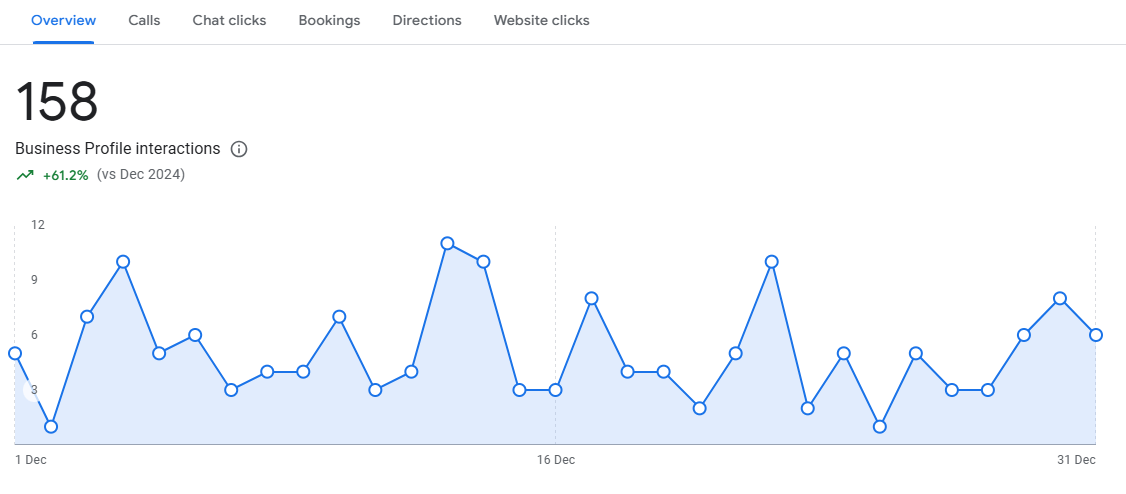
Why Most Lead Sources Eventually Stop Working
Most contractors in the window and door industry have already tried several forms of lead generation.
Some work for a while.
But many create short-term activity without building long-term stability.
Referrals Are Great, but They Don’t Create Predictable Lead Flow
Referrals are often some of the best qualified opportunities a contractor can get.
If a homeowner hears about you from existing customers, neighbors, or even local real estate agents, trust is already there. Those leads usually close well.
But referrals are not scalable.
They dry up unexpectedly. You cannot control the timing. And even strong word-of-mouth does not guarantee a consistent number of new leads each month.
Referrals are valuable. They are just not a complete lead system.
Shared Lead Platforms Turn Projects Into Price Shopping
This is one of the biggest frustrations in the window and door industry.
Platforms like Angi and HomeAdvisor may promise window leads and door leads, but those leads are often shared with multiple contractors at the same time.
That means the homeowner is not coming into the conversation focused on trust or fit. They are collecting quotes.
For many door contractors and local installers, that turns into the same problem:
- low exclusivity
- more price competition
- more wasted time
- lower close rates
Instead of talking to homeowners actively searching for your company, you are competing in a crowded environment where everyone is bidding for the same attention.
That is why so many door companies describe shared lead platforms as a race to the bottom.
Trade Shows Can Help, but They Usually Create Spikes, Not Systems
Trade shows and local expos still have value in some markets.
They can create awareness. They can generate a few conversations with potential customers. In some cases, they can even lead to jobs.
But they rarely create a dependable stream of qualified window and door inquiries.
Most contractors see the same pattern: a burst of activity after the event, then a drop-off.
That makes trade shows useful as a supplement, not a predictable foundation.
PPC Can Burn Through Budget Fast Without Structure
Pay per click can work for a window and door business.
But it works best when the rest of the system is already in place.
Without good landing pages, proper tracking, strong follow up, and a clear service area strategy, PPC can quickly turn into wasted spend. And because window replacement and door installation keywords are competitive, costs rise fast.
A lot of contractors get reports showing traffic, clicks, and impressions, but still do not know:
- which leads turned into estimates
- which estimates turned into jobs
- whether the campaign actually produced ROI
That is where agency frustration sets in. Too many contractors hear some version of, “Give it more time,” while still getting no real visibility into booked revenue.
The common thread across all these channels is simple:
They can create activity.
But activity is not predictability.
And predictability is what allows a home service business to hire, plan, and grow without constantly wondering where the next job is coming from.
Where Good Opportunities Actually Come From Today
The good news is that most homeowners are not hard to find.
They are already showing intent.
Today, most homeowners actively searching for windows or doors start in one place: Google.
They search terms like:
- window replacement near me
- best window and door companies in [city]
- patio door installation near me
- local door companies
- new windows for my home
- trusted door companies near me
These are not casual searches.
These are high-intent searches from people already thinking about a project, comparing local providers, and deciding who to call.
That is why local search results matter so much in this trade.
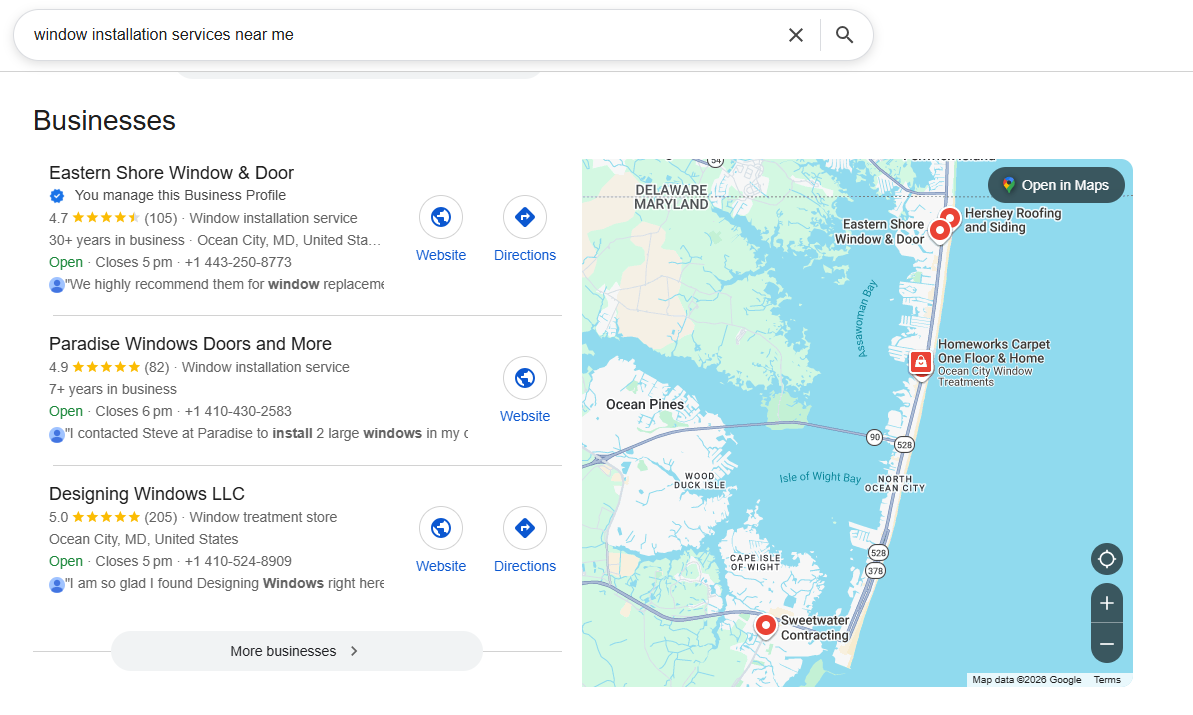
Google Search and Google Maps Are the Modern Billboards
For many window and door companies, the highest-value visibility now happens inside Google search results and Maps.
When someone searches for a local installer, Google usually shows:
- a map pack
- review counts
- photos
- business hours
- service area information
- contact options
That listing often becomes the first impression.
And for many smaller-market contractors, this is where a real advantage exists.
In small to mid-sized cities, the company with the biggest budget does not always win. The window and door companies and door companies with stronger local proof, better reviews, and cleaner profiles often win the call.
That is why consistency often beats budget.
Why Reviews and Local Proof Matter So Much
Most home improvement projects involving windows and doors are not impulse buys.
Homeowners are making a meaningful investment. They want to feel confident before they contact anyone.
That is why positive reviews, project photos, and visible proof matter so much.
A strong profile tells the homeowner:
- this company does this work regularly
- they have satisfied customers
- they work in my area
- they look established and trustworthy
That trust matters even more on mobile devices, where homeowners are scanning quickly and making decisions fast.
In many cases, the contractor who gets the inbound call is not necessarily the cheapest.
It is the one who looks the most credible in the search results.
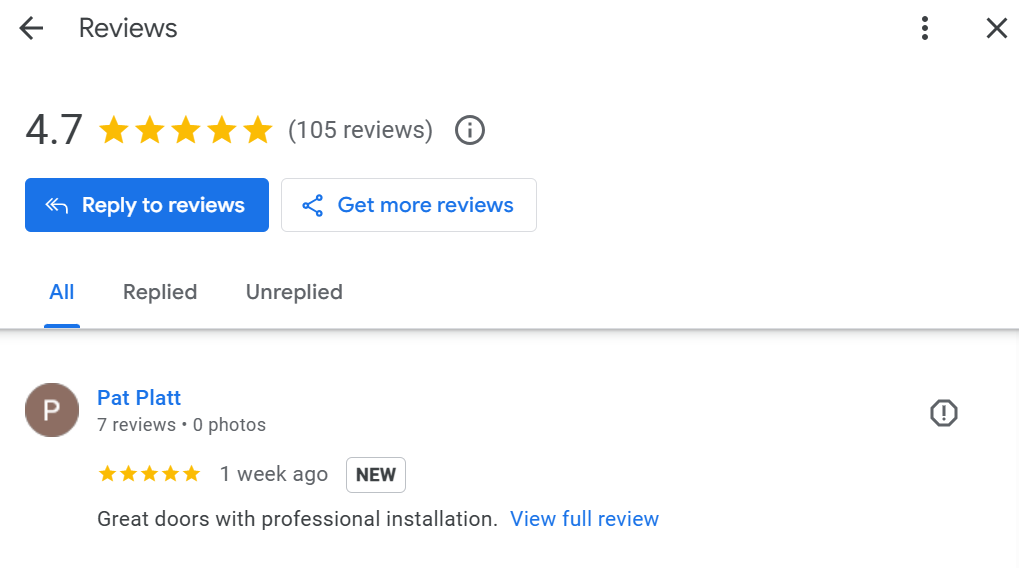
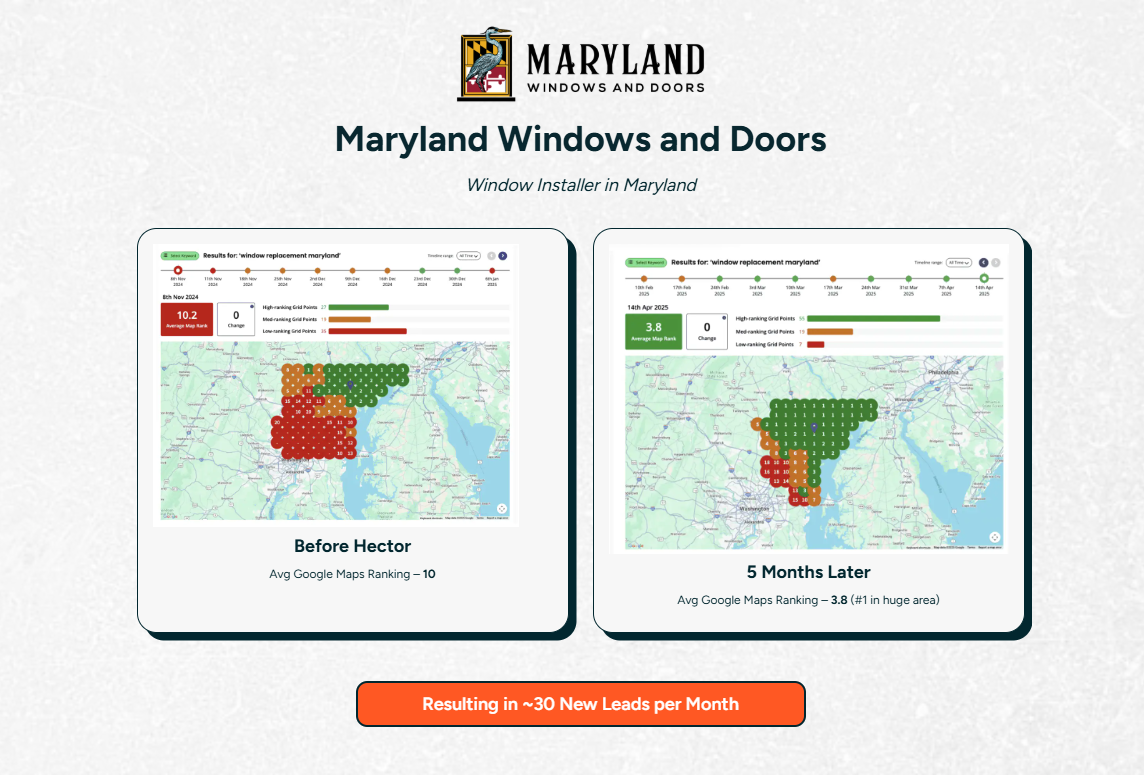
A Real Example: Maryland Windows & Doors
This is exactly what happened with Maryland Windows & Doors in Bel Air, Maryland.
They already had a strong reputation, but their lead flow was inconsistent. They had also dealt with marketing providers that focused on traffic instead of booked jobs, which left them with limited visibility into what was actually driving revenue.
Once the focus shifted to Local SEO, review generation, service-area content, and a stronger Google profile, the results changed.
They now generate roughly 30 to 40 qualified leads per week through Local SEO, book an average of 8 to 10 jobs per week, and see an estimated 3 to 4x ROI on monthly SEO investment.
More importantly, they built a lead flow that was less dependent on shared lead platforms and easier to track through call and lead reporting.
That is the difference between random visibility and owned visibility.
How Visibility Turns Into Real Phone Calls and Booked Jobs
This part is simpler than many contractors expect.
A homeowner decides they need new windows or a door upgrade.
They search.
Google shows a handful of local options.
The homeowner compares those options and contacts one or two.
That is the decision path.
The Typical Homeowner Journey
For most window and door services, it looks like this:
- A homeowner realizes they need help.
- They search Google.
- They compare local window and door companies and nearby door companies.
- They look at reviews, photos, and credibility.
- They reach out to the company that feels safest to call.
That is why search engine optimization matters in practical terms.
It is not about abstract rankings.
It is about showing up when homeowners are actively looking, then giving them enough confidence to call.
Why Proof Converts Better Than Aggressive Marketing
Contractors do not need louder messaging nearly as much as they need stronger proof.
In this trade, proof looks like:
- recent project photos
- visible service area coverage
- detailed customer reviews
- a mobile-friendly site
- clear contact information
- fast follow up once a lead comes in
Those trust signals improve lead quality. They also improve close rate.
When the homeowner already feels good about the company before the first conversation, the sales process gets easier.
That is one reason organic and local opportunities often outperform shared platforms. The intent is stronger, and the trust is already higher.
The Shift That Changes Everything
A lot of contractors think they need more lead volume.
What they actually need is a system that attracts high-intent prospects and makes it easier to convert them.
That is the real shift:
from chasing random leads
to building a visible, trusted local presence
Once that happens, more calls start turning into consultations, and more consultations start turning into booked jobs.
That is where predictability begins.
The Hector 6-Step Predictable Lead System for Window and Door Contractors
If you want more consistent window and door leads, the answer is usually not more random tactics.
It is building the right system in the right order.
Some steps create faster traction. Others build long-term growth. Together, they create a more stable pipeline.
Step 1: Optimize Your Google Business Profile
For many contractors, this is the fastest win.
Your Google Business Profile is often the first thing a homeowner sees when searching for local window and door companies or door companies.
Make sure it includes:
- correct categories
- accurate business hours
- clear service area details
- strong project photos
- complete business information
For a window and door business, this profile does real selling before anyone calls.
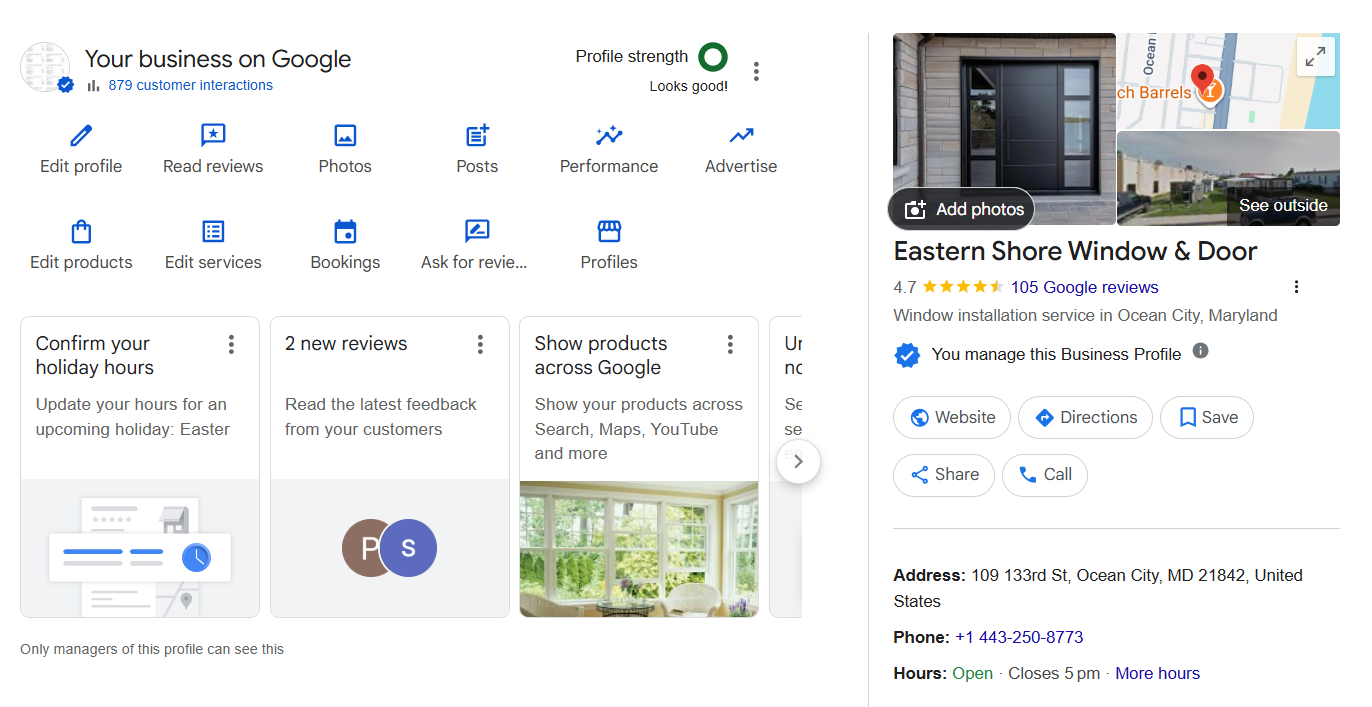
Step 2: Build a Consistent Review Process
Reviews are one of the strongest trust signals in local search.
Instead of asking randomly, create a simple process after completed jobs.
That helps you build a steady stream of feedback from satisfied customers, which strengthens both trust and visibility.
This is also part of reputation management. Contractors who treat reviews as a system usually outperform those who leave them to chance.
Step 3: Use Local Services Ads for Faster Traction
Local Services Ads can help bridge the gap while SEO is building.
For many home service companies, they can create traction in 1 to 3 weeks. They also work on a pay-per-lead model, which makes them easier to evaluate than broader ad campaigns.
But LSA works best when your review profile and GBP are already strong.
Step 4: Build a Website That Supports Local SEO
A website should not just sit online.
It should support lead generation for local contractors.
That means:
- service pages for window replacement, door installation, and related work
- city and suburb pages for each service area
- real project photos
- clear contact paths
- strong local relevance
A good website helps you appear in more search results and gives potential customers confidence when they land on the page.
This is where many window and door companies separate themselves from weaker door companies that still rely on outdated sites.
Step 5: Invest in Ongoing SEO and Local Authority
This is where predictability starts to compound.
Over time, stronger local SEO helps your company appear for more searches tied to your services, markets, and buyer intent.
That can include terms around:
- window replacement
- patio door installation
- window and door companies
- local door companies
- energy-efficient windows
- nearby installers in surrounding suburbs
This is what creates long-term growth. Instead of rebuying every lead, you build visibility that continues working.
For many contractors, meaningful traction starts showing up in 2 to 4 months, then compounds from there.
This is also where strong lead generation becomes an asset instead of an expense.
Step 6: Add PPC Strategically, Not Desperately
PPC still has a place.
But it works best after the foundation is stable.
At that point, paid search can help you:
- test new service areas
- promote higher-value services
- fill short-term capacity gaps
- support expansion plans
That is very different from using PPC as a rescue tool.
When used with structure, PPC can support growth. Without structure, it often becomes another source of wasted spend.
FAQs
What is the best way to get window and door leads today?
For most established contractors, the best source of window and door leads is strong visibility in Google Search and Maps.
That is where homeowners actively searching are already making decisions.
Why do shared leads from Angi or similar platforms convert poorly?
Because the homeowner is usually talking to multiple contractors at once.
That lowers exclusivity, increases price shopping, and makes it harder to win work based on trust and fit.
It is one reason many door contractors eventually move away from shared platforms when they want steadier growth.
How long does window and door lead generation through SEO take?
In most cases:
- Local Services Ads can help create early traction in 1 to 3 weeks
- Local SEO usually begins showing meaningful movement in 2 to 4 months
- stronger compounding growth builds after that
That timeline can feel slow if you have been sold hype before. But when done correctly, SEO becomes one of the few assets that keeps producing without constant rebuying.
This is one reason the best lead generation systems in the window and door industry are built for the long term, not just this month’s numbers.
Do window and door contractors still need PPC?
Sometimes.
But PPC works best when it supports a stronger local system. It is not the first fix for every contractor.
For many door contractors, PPC works best after reviews, pages, and tracking are already in place.
How many reviews should a window installation company have?
There is no universal number.
The better question is how your review profile compares to the local window and door companies and door companies showing up in your market. In some areas, 40 reviews may be competitive. In others, the top window and door companies and door companies may have well over 100.
What matters most is recency, quality, and relevance.
Where Hector Fits Into the Picture
This is where many contractors want a real partner instead of another agency.
The problem is usually not that they have never tried digital marketing.
It is that they have tried disconnected pieces of it:
- paid ads
- weak SEO
- confusing reports
- outsourced communication
- no clear revenue tracking
Hector’s position is straightforward.
Contractors do not need more random lead sources.
They need a system they own.
That means building assets like:
- stronger local visibility
- a better Google Business Profile
- review strength
- clearer tracking
- a site built for local search
- reporting tied to booked jobs, not vanity metrics
That is the difference between dependency and ownership.
For family-owned contractors in smaller markets, that difference matters. You do not need a corporate marketing machine. You need a practical system that helps your window and door business compete, gives you more control, and makes growth easier to track.
And in a crowded market full of other window and door companies and door companies, that clarity matters.
A Story From the Field: From Random Leads to Predictable Jobs
A lot of contractors reach the same moment eventually.
They realize they have been chasing lead sources instead of building a real lead generation system.
For a window and door business, that often looks like this:
Referrals are still coming in, but not consistently. Shared door leads create quote opportunities, but too many never close. PPC spends money fast. The business stays busy enough to survive, but not stable enough to feel fully in control.
Then the focus changes.
Instead of trying to buy more lead volume, the company starts building owned visibility.
The Google profile gets stronger. Reviews improve. The website starts ranking for the right service-area searches. Tracking gets clearer. Follow up improves. Missed calls become less frequent. The CRM pipeline starts showing where leads come from and what turns into jobs.
That is the dashboard realization moment a lot of owners talk about.
For the first time, they can see what is working.
And when they can see what is working, they can make better decisions about hiring, growth, and where to invest next.
That is when the business starts moving from randomness to predictability.
If You Want Clearer, More Predictable Leads
If your current lead flow feels inconsistent, that does not always mean your market is the problem.
It may mean your marketing is still built on channels you do not control.
Better lead generation usually does not come from adding more noise.
It comes from building a system that makes your company easier to find, easier to trust, and easier to contact when homeowners are ready.
That is what turns window and door inquiries into real, booked jobs.
And if you want help thinking through what that could look like for your market, your service area, and the kind of projects you actually want more of, that conversation should feel practical, clear, and low pressure.
Related Posts